
Novi Sad
The cultural heart of Vojvodina

A little closer toNovi Sad.

A city of elegant architecture, riverside life, creative energy, and relaxed Vojvodina charm — where the Danube flows beneath one of Europe’s great fortresses.

370,000Population
DanubeRiver
1694Founded
April – OctoberBest Time
Belgrade Nikola Tesla AirportNearest Airport
SerbiaA different perspective.
About Novi Sad

The cultural heart of Vojvodina

Novi Sad is the second-largest city in Serbia and the administrative, cultural, and economic center of the Autonomous Province of Vojvodina.

Located on the banks of the Danube River, directly opposite the historic Petrovaradin Fortress, Novi Sad is known for its elegant architecture, multicultural heritage, relaxed atmosphere, wide boulevards, lively cafés, festivals, and green spaces.

The city has long been a meeting point of different peoples, religions, and cultures. Serbian, Hungarian, German, Jewish, Slovak, and other influences have all contributed to its distinctive identity.

Novi Sad is often called the “Serbian Athens” because of its historical importance as a center of Serbian culture, education, publishing, and intellectual life.

Today, it is one of Serbia’s most attractive city-break destinations and was named European Capital of Culture in 2022, confirming its strong reputation for art, music, architecture, and cultural diversity.

Explore Novi Sad Tours
✳ Novi Sad
What To See & Do

Top sights in Novi Sad

From a monumental fortress above the Danube to colourful squares, elegant streets, and historic neighbourhoods — Novi Sad is compact, walkable, and full of character.

Petrovaradin Fortress

Petrovaradin Fortress is the symbol of Novi Sad and one of the most impressive preserved fortifications in Europe.The current fortress was largely developed under Habsburg rule from the late 17th century onward and occupies a strategic position high above the Danube. Its massive walls, gates, underground tunnels, courtyards, and viewpoints reflect centuries of military history. Today, the fortress is home to museums, galleries, artist studios, restaurants, cafés, and cultural spaces. Its most recognizable feature is the famous Clock Tower, whose hands are unusually reversed — the large hand shows the hours while the smaller one indicates the minutes. The fortress also hosts the internationally known EXIT Festival, which attracts music fans from around the world.
Freedom Square

Trg Slobode — Freedom Square is the heart of Novi Sad and one of the city’s most beautiful public spaces.The square is surrounded by impressive historic buildings, cafés, shops, and some of the city’s most important architectural landmarks. The Neo-Renaissance City Hall dominates one side of the square, while the striking Name of Mary Church, with its tall Gothic Revival tower, stands opposite. Freedom Square is a natural starting point for exploring Novi Sad on foot and connects directly with the pedestrian zone of Zmaj Jovina Street. Throughout the year, the square hosts concerts, markets, public celebrations, festivals, and seasonal events.

Zmaj Jovina & Dunavska Street

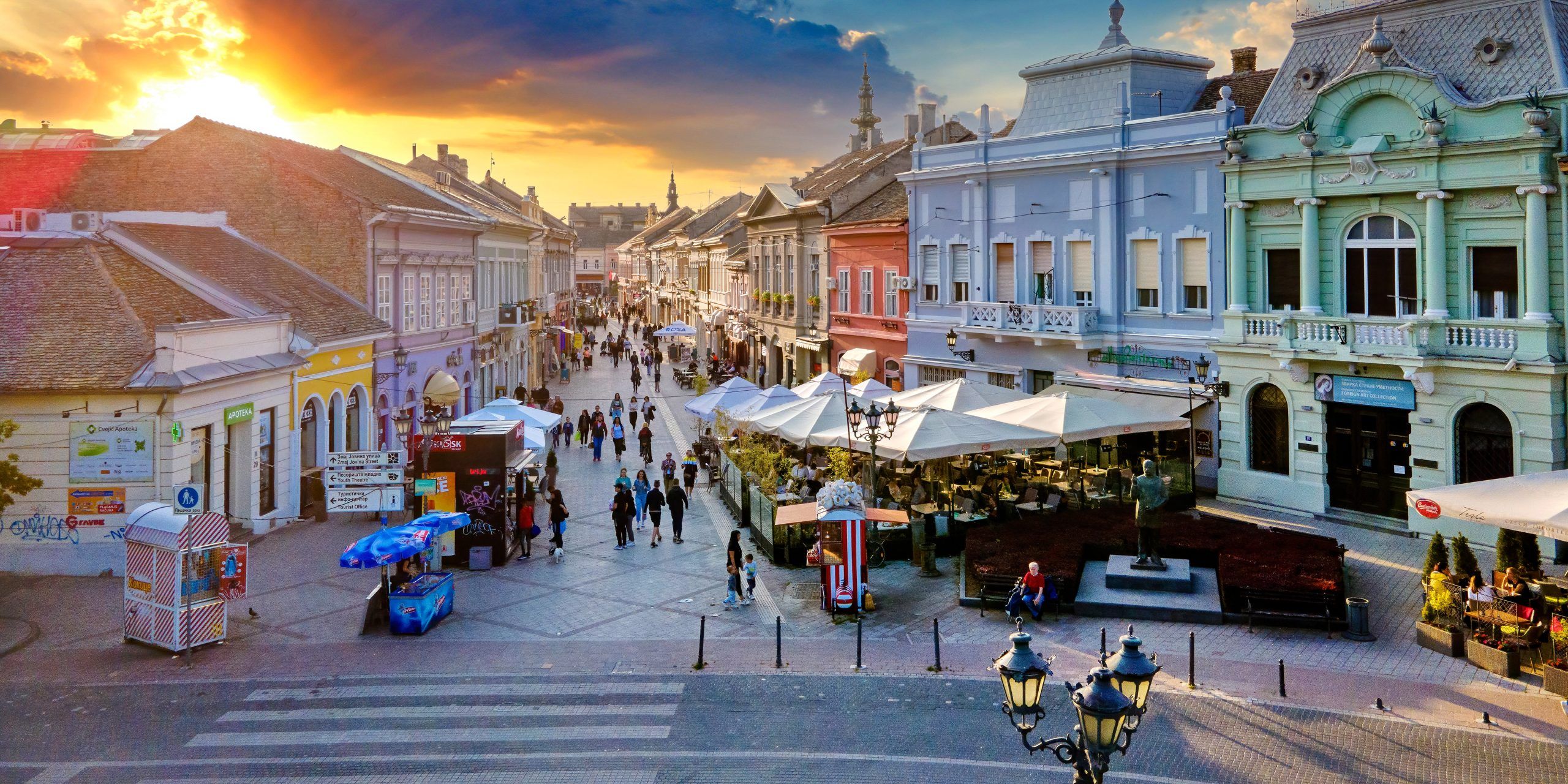
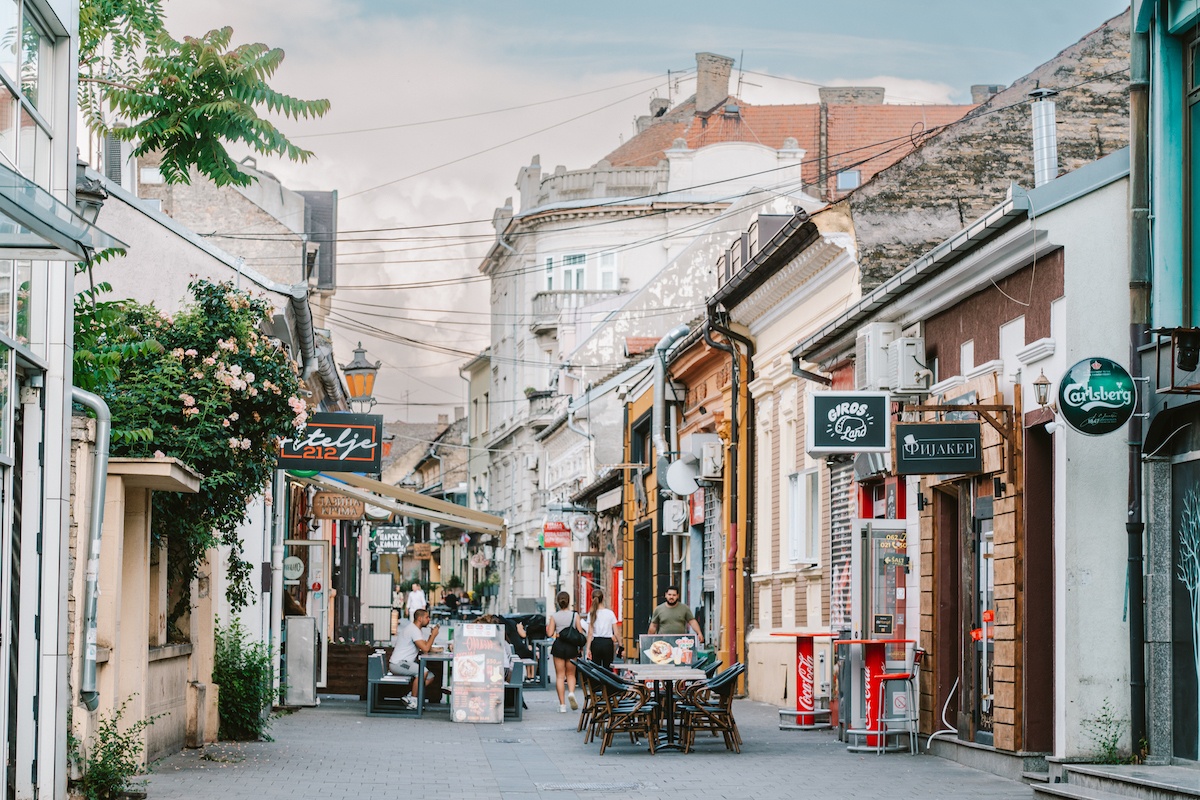
Zmaj Jovina Street is Novi Sad’s main pedestrian street and one of the liveliest parts of the historic center. Lined with colourful façades, cafés, restaurants, shops, galleries, and historic buildings, it connects Freedom Square with the quieter atmosphere of Dunavska Street. Dunavska is one of the oldest streets in the city and leads toward Danube Park and the river. Together, these streets form the heart of Novi Sad’s café culture and are ideal for walking, shopping, eating, or simply watching everyday city life. Their elegant architecture reflects the city’s strong Central European heritage.

Petrovaradin & the Clock Tower

The old town of Petrovaradin lies beneath the fortress on the opposite bank of the Danube. Its narrow streets, Baroque buildings, churches, old military structures, and quiet atmosphere provide a completely different experience from central Novi Sad. The famous Clock Tower above the fortress offers one of the best panoramic viewpoints over the city, the Danube, and the surrounding plains. Petrovaradin has increasingly become a creative district, with art studios, galleries, restaurants, and cultural venues occupying historic buildings. Walking across the bridge from central Novi Sad to Petrovaradin is one of the best ways to experience both sides of the city.

Novi Sad
History

More than 300 years of history

Although the wider area has been inhabited since prehistoric times, the modern city of Novi Sad began developing at the end of the 17th century.

The settlement that grew on the northern bank of the Danube was originally known as Petrovaradinski Šanac, developing alongside the construction of Petrovaradin Fortress.

Novi Sad was officially mentioned in 1694, while the city gained its most important early privilege in 1748, when Empress Maria Theresa granted it the status of a free royal city.

At that time, the settlement officially received the name Novi Sad, while German and Hungarian versions of the name — Neusatz and Újvidék — were also widely used.

During the 18th and 19th centuries, Novi Sad developed into an important center of trade, craftsmanship, education, publishing, and Serbian cultural life.

The city became home to important institutions such as the Serbian National Theatre and Matica Srpska, helping it earn the nickname “Serbian Athens.”

In 1849, Novi Sad was heavily damaged during revolutionary conflict when it was bombarded from Petrovaradin Fortress. Much of the city had to be rebuilt, resulting in the elegant architectural mix visible today.

After World War I, Novi Sad became part of the Kingdom of Serbs, Croats and Slovenes, and during the 20th century it expanded into a modern university, business, and cultural center.
Today, Novi Sad combines its Central European heritage with contemporary Serbian culture and a distinctly relaxed atmosphere.

Practical Guide

Outdoor, food, nightlife & stay

Everything you need to plan the perfect Novi Sad trip.

Explore Serbia ↗
Outdoor Activities

Novi Sad offers plenty of opportunities to enjoy the outdoors despite being a major urban center. The Danube River is central to city life, with riverside promenades popular for walking, cycling, running, fishing, and relaxing. Štrand, one of the most famous river beaches in Serbia, becomes a major summer gathering place where locals swim, sunbathe, play sports, and enjoy cafés beside the Danube. Just outside the city lies Fruška Gora National Park, one of the most important natural areas in northern Serbia. The mountain is ideal for hiking, cycling, picnics, wine tasting, and exploring historic Serbian Orthodox monasteries. The surrounding countryside is also known for traditional salaš farmsteads, vineyards, and wine routes.

What & Where to Eat

Novi Sad’s cuisine reflects the multicultural character of Vojvodina. Traditional Serbian food is combined with Hungarian, Austro-Hungarian, Central European, and regional influences. Popular dishes include grilled meats, goulash, paprikash, fish soup, stuffed vegetables, pastries, local cheeses, and homemade bread. The Danube region is particularly known for fish dishes and fish stew, often served in traditional riverside restaurants known as čardas. Visitors should also try Vojvodina specialties such as strudel, homemade cakes, local sausages, and seasonal dishes. The surrounding Fruška Gora region is one of Serbia’s best-known wine-producing areas, making Novi Sad an excellent destination for local wine tasting.

Entertainment & Nightlife

Novi Sad has a lively but generally more relaxed nightlife atmosphere than Belgrade. The historic center is filled with cafés, pubs, cocktail bars, restaurants, and live music venues. During warmer months, nightlife also spreads toward the Danube, Petrovaradin, and outdoor venues across the city. The internationally famous EXIT Festival, held at Petrovaradin Fortress, is the city’s biggest music event and has helped establish Novi Sad as one of the Balkans’ best-known festival destinations. Throughout the year, Novi Sad also hosts cultural festivals, theatre performances, exhibitions, concerts, food events, and traditional celebrations. Whether you prefer a quiet wine bar, live music, a riverside terrace, or a major international festival, Novi Sad offers something for almost every taste.

Where to Stay

Novi Sad offers accommodation for a wide range of travellers, including modern hotels, boutique properties, apartments, guesthouses, hostels, and private rooms. The historic center around Freedom Square and Zmaj Jovina Street is ideal for first-time visitors who want attractions, cafés, restaurants, and nightlife within walking distance. Petrovaradin is a good option for travellers looking for a quieter atmosphere close to the fortress and Danube. Visitors arriving for EXIT Festival often choose accommodation near the fortress or along the riverside. Whether you're visiting for culture, food, festivals, history, or a relaxing weekend, Novi Sad is compact, easy to explore, and well suited to both short city breaks and longer stays.

There is always another story

Stay curious.
Keep exploring.

Discover Serbia ↗
Six countries. Your own journey.

Let’s plan your Balkan trip.

A few details now. An itinerary shaped around you.

  1. 1Travellers & days
  2. 2Destinations
  3. 3Your details

Who’s coming, and for how long?

Start with your group size and your ideal trip length.

Ages 18 and over
Ages 0–17
Number of days
Step 1 of 3