

Pula Arena
Roman amphitheater, one of the best-preserved worldwide
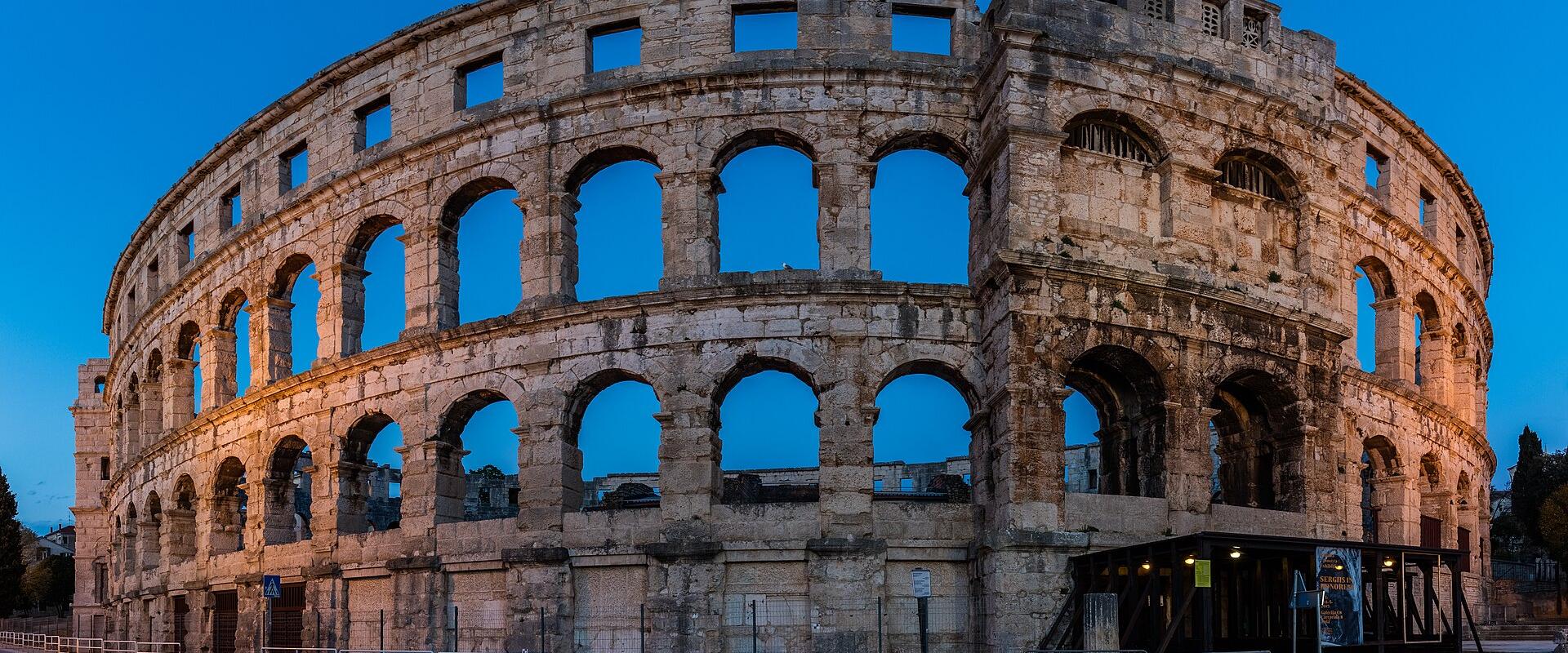
Roman amphitheater city with coastal views and ancient ruins
The city’s medieval and Austro-Hungarian heritage is reflected in its churches, fortresses and grand buildings, such as the Venetian Fortress, the Kaštel, which offers panoramic views of the city and sea. Pula was the main naval base of the Austro-Hungarian empire from the 1850s, and its shipyards, barracks and villas date from that period. The Zerostrasse tunnels, built as air-raid shelters in the First World War, are now open to visitors and give a fascinating glimpse of Pula’s more recent past. In the early 20th century the writer James Joyce taught English in a language school here, and a statue of him outside a cafe called Uliks recalls it. The city’s museums, including the Archaeological Museum of Istria and the Historical and Maritime Museum, show the region’s art, history and maritime traditions. The Museum of Istrian Olive Oil, the Museum Olei Histriae, tells the story of Istria’s olive oil in an engaging way.
Pula’s waterfront is a hub of activity, with a busy harbor, marinas and a palm-lined promenade. The city’s beaches, such as Punta Verudela, Valkane and Ambrela, are popular for swimming, sunbathing and water sports, with clear turquoise water and family-friendly facilities. Many of them are rocky platforms among pine trees, and the water is deep and clean. Boat tours depart from the harbor to the Brijuni National Park, a group of islands known for their lush landscapes, Roman ruins and safari park, and the large shipyard cranes, lit up at night, are a striking part of the skyline.
Cultural life in Pula is vibrant, with festivals, concerts and community events that celebrate local music, cuisine and traditions. The Pula Film Festival, held in the Arena, is among the oldest in the region, and summer concerts bring international acts to the amphitheater. The city’s restaurants and konobas serve fresh seafood, Istrian pasta, truffles and regional wines, best enjoyed with a view of the sunset over the Adriatic. Local markets and food festivals show the flavors of Istria, which makes Pula a favorite for food and wine lovers. The covered market in the center is a good place for cheese, ham, olive oil and fish.
Roman amphitheater, one of the best-preserved worldwide
Well-preserved Roman temple dedicated to Augustus
Small Roman theatre ruins in Pula old town
Museum of Istrian olive oil history and tasting
Roman triumphal arch honoring Sergii family in Pula
Roman-era twin arches marking Pula’s ancient entrance
Underground WWI tunnels beneath Pula fortress
Ancient Roman square with temple ruins and history
Bronze James Joyce statue at historic café
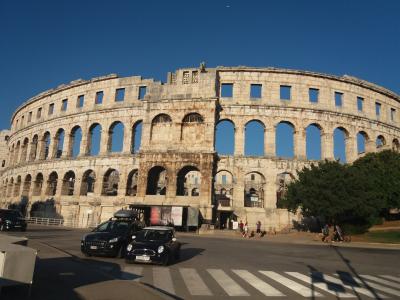
Pula’s history stretches back to the prehistoric Histri tribe and flourished under Roman rule, when it became a major port and administrative center. The city’s crowning jewel is the Pula Arena, a 1st-century Roman amphitheater that once hosted gladiator games and now hosts concerts and festivals. With a capacity of around twenty thousand in antiquity, it is the sixth-largest surviving Roman arena and the only one with all four side towers intact, and underground galleries hold an exhibition on olive oil and wine production. Other Roman landmarks include the Temple of Augustus, the Arch of the Sergii and the Twin Gates, all set amid the winding streets and lively squares of the old town. The Forum, once the center of Roman Pula, is still the main square, with the Temple of Augustus on its side and the town hall beside it, and the Roman Theatre, a smaller structure on the hillside, hosted performances in antiquity.
The best time to visit is from May to October, when the weather is warm and outdoor activities are in full swing. Late spring and early autumn are particularly ideal for milder temperatures and fewer crowds.
Pula is accessible by road, rail, and air, with the airport located just 7 kilometers from the city center. Regular buses and ferries also connect the city to other Istrian towns, islands, and major Croatian cities.
The city’s crowning jewel is the 1st-century Pula Arena, a Roman amphitheater that now hosts concerts and festivals. Other significant Roman landmarks include the Temple of Augustus, the Arch of the Sergii, and the Twin Gates.
Restaurants and konobas serve fresh seafood, Istrian pasta, truffles, and regional wines, often with views of the Adriatic sunset. Local markets and food festivals further showcase the rich flavors of Istria for foodies and wine lovers.
The waterfront features a bustling harbor and palm-lined promenade, while beaches like Punta Verudela and Valkane offer swimming and water sports. Visitors can also take boat tours from the harbor to the nearby Brijuni National Park.
EUR
Croatian