

Greeting to the Sun
Solar-powered light circle symbolizing the solar system
Ancient Dalmatian port with Roman ruins and modern art
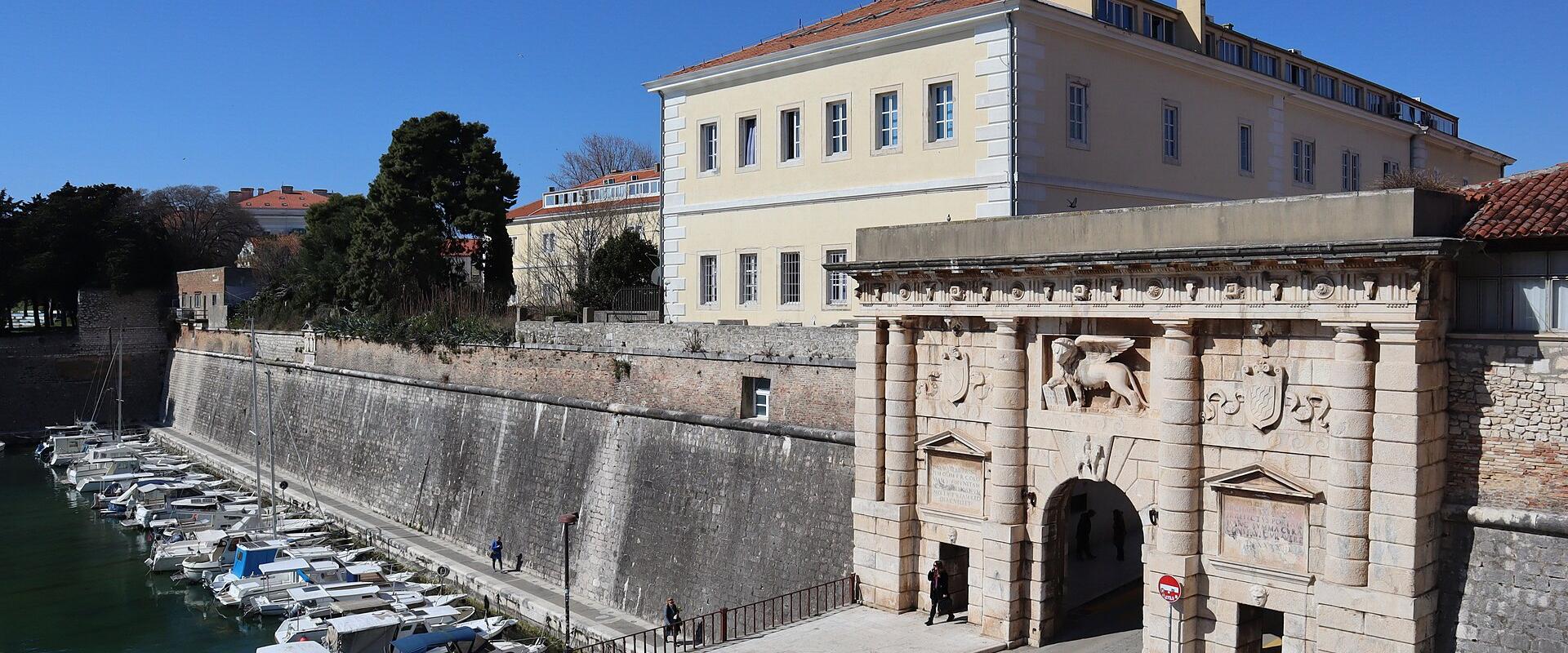
The center of Zadar is its pedestrian-only old town, a maze of marble streets lined with Roman ruins, medieval churches and busy cafes. The Roman Forum, the largest on the eastern Adriatic, is surrounded by landmarks such as the Church of St. Donatus, a unique circular church dating to the 9th century, and the Cathedral of St. Anastasia, whose bell tower offers panoramic views. The Church of St. Chrysogonus, with a Romanesque interior, and the Five Wells Square, Trg Pet Bunara, show other layers of the city’s history. The Land Gate and Sea Gate, both adorned with Venetian lions, mark the entrances to the historic core, and the People’s Square, Narodni Trg, has been the civic center for centuries.
Zadar’s waterfront is home to two of Croatia’s most innovative attractions: the Sea Organ, Morske Orgulje, an architectural sound installation that uses the movement of the waves to create haunting music, and the Greeting to the Sun, a solar-powered light display that dazzles at sunset. The Sea Organ was designed by the architect Nikola Bašić and opened in 2005, and the Greeting to the Sun followed in 2008. These modern masterpieces draw crowds each evening and create a magical atmosphere as the sun dips below the horizon, and the Riva promenade at sunset is one of the best places in Croatia for a stroll.
Beyond its historic and artistic sites, Zadar offers a wealth of activities. Visitors can relax on city beaches such as Kolovare and Borik, take boat trips to the nearby islands of Ugljan, Dugi Otok and Pašman or explore the dramatic landscapes of Krka and Paklenica national parks. Cycling around Zadar is a good way to combine the city with the coast, and speedboat tours and half-day boat trips show the archipelago from the sea. Queen Jelena Madijevka Park, established in 1829, is said to be the first public park in Croatia, and it is a shady place for a break. The city’s lively markets, seafood restaurants and wine bars show the flavors of Dalmatia, while summer festivals, concerts and open-air events fill the calendar with music and celebration. Food tours with a local guide are a good way to try Pag cheese, prosciutto, fish and maraschino liqueur.
Solar-powered light circle symbolizing the solar system
Romanesque basilica with Baroque altar and ancient columns
Croatia’s first public park with sea views
Compact fortified old town on marble streets
Musical waves played by the Adriatic Sea
Five ancient wells and Croatia’s oldest park
Speedboat island-hopping tour with drinks in Zadar
Historic Romanesque square with a prominent clock tower
Medieval civic square and administrative centre
Half-day boat tour of Zadar's islands
Oldest Croatian city, Roman ruins, and sea organ
Sunset Sea Organ and Sun Salata promenade
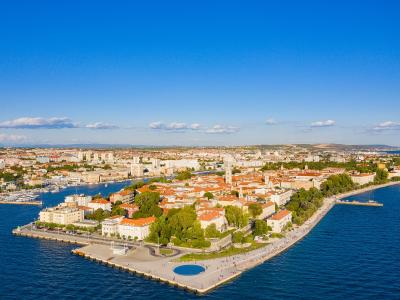
Zadar’s history stretches back to the 9th century BCE, which makes it one of Croatia’s oldest continuously inhabited cities. Originally settled by the Liburnians, Zadar became a Roman colony in the 1st century BCE, leaving behind impressive remains such as the Roman Forum, ancient city walls and the foundations of temples and basilicas. During the Middle Ages Zadar flourished as a key port and trading hub under Venetian rule, which is reflected in its ornate city gates, bell towers and palaces. Despite damage in wars and earthquakes, and heavy bombing in the Second World War, Zadar has preserved its rich heritage while embracing modern creativity. The Compact Fortified Old Town, enclosed by walls that are among the best-preserved in the region, is recognised for its defensive system, and the Venetian defences around Zadar were added to the UNESCO World Heritage list.
The historic core features the Roman Forum, the largest on the eastern Adriatic, alongside landmarks like the 9th-century Church of St. Donatus and the Cathedral of St. Anastasia. Visitors can also explore the Venetian-style Land Gate and Sea Gate, which mark the entrances to the pedestrian-only marble streets.
The waterfront is home to the Sea Organ, an architectural sound installation that creates music using wave movements, and the Greeting to the Sun, a solar-powered light display that activates at sunset. These innovative masterpieces draw crowds each evening for a magical atmosphere.
Zadar is accessible via an international airport located 10 km from the center, as well as regular bus and ferry connections. Once there, the old town is best explored on foot, while local buses and taxis provide access to beaches and outlying neighborhoods.
The peak season runs from late June to late August, offering hot weather and warm seas for beach activities. For milder temperatures and fewer crowds, May, June, and September provide excellent conditions for sightseeing and outdoor exploration.
Visitors can relax on city beaches like Kolovare and Borik, take boat trips to nearby islands such as Ugljan and Dugi Otok, or explore Krka and Paklenica national parks. The city also offers lively markets, seafood restaurants, and summer festivals showcasing Dalmatian culture.
EUR
Croatian