

Diocletian's Palace
Ancient Roman palace and UNESCO site in Split

Roman palace city with Adriatic beaches and vibrant nightlife
Beyond the palace, Split’s Riva promenade is the city’s social hub, lined with palm trees, lively cafes and street performers, and in the evening it fills with people strolling. The city’s beaches, such as Bačvice, Firule and Kašjuni, are popular for swimming, sunbathing and water sports, with clear water and a relaxed atmosphere. Bačvice is the home of picigin, a ball game played in shallow water that is a local passion. Marjan Hill, a forested park on the city’s western edge, offers hiking and cycling trails, panoramic viewpoints and hidden chapels, which makes it a favorite spot for outdoor enthusiasts, and the Marjan Hill stairs lead from the old district of Varoš to the top in a few minutes.
Split’s cultural life is lively, with museums such as the Split City Museum, the Archaeological Museum and the Museum of Fine Art. The Galerija Meštrović, in a villa designed by the sculptor Ivan Meštrović, presents the work of one of Croatia’s best-known artists, whose monumental statue of Gregory of Nin stands next to the Golden Gate of the palace. The city hosts numerous festivals, concerts and open-air performances, including the Split Summer Festival, which fills the squares of the palace with opera and theatre in July and August. The culinary scene features fresh seafood, Dalmatian specialties and local wines, best enjoyed in traditional konobas or modern bistros. Pašticada, a slow-cooked beef dish, and black risotto are classics. Nightlife ranges from beach bars and clubs to wine bars and live music venues.
Day trips from Split include excursions to the islands of Brač, Hvar and Vis, as well as to Krka National Park and the historic town of Trogir, which is also a UNESCO site. Ferries, catamarans and organized tours make island hopping and coastal exploration easy and accessible. Active visitors can try ATV tours in the hinterland, rafting on the Cetina River or climbing in the hills above the city.
Ancient Roman palace and UNESCO site in Split
60m Romanesque bell tower in UNESCO site
Small stone church in Split
Sculpture museum in Split, Croatia
314 steps to panoramic Split views
Café seating in Diocletian's Palace Peristyle
Ancient Roman mausoleum turned cathedral in Split
6th-century Baptistery in a 3rd-century Roman temple
Seaside promenade beside Diocletian’s Palace
ATV quad tours through Dalmatian canyons and rivers
UNESCO site housing Roman and Baroque art
Roman palace with bell tower in Split
Split museum of Croatian archaeological monuments
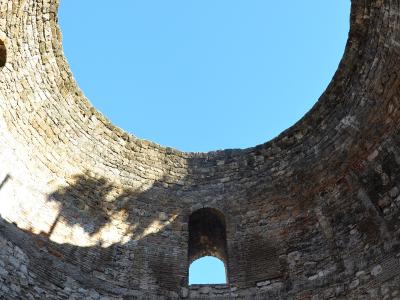
Split’s history dates back to the 3rd century CE, when the Roman Emperor Diocletian built his retirement palace on the site, close to his birthplace at Salona. Over the centuries the palace evolved into a living city, as people fleeing invaders in the 7th century moved inside its walls, and its walls, temples and cellars now house homes, shops, cafes and museums. The old town is a maze of marble streets, ancient columns and hidden courtyards, with highlights including the Cathedral of St. Domnius, originally Diocletian’s mausoleum, the Peristyle Square and the Temple of Jupiter. The cathedral’s bell tower, the Bell Tower of Saint Domnius, can be climbed for a view over the red roofs and the harbor, and the Cathedral Treasury holds a collection of church objects. The palace’s underground cellars are open to visitors and often host art exhibitions and markets. Next door, the Museum of Croatian Archaeological Monuments displays early medieval stonework from the Croatian kings.
The best times to visit are from May to June and September to October, when the weather is warm and the beaches are active. These periods offer milder temperatures and fewer tourists compared to the busy and hot months of July and August.
Split is accessible via Split Airport with regular flights from major European cities, as well as by bus and train connecting to the ferry port. Once there, the old town is best explored on foot, while local buses, taxis, and bike rentals are available for getting around the wider city.
Key highlights include the Cathedral of St. Domnius, which was originally Diocletian’s mausoleum, as well as the Peristyle Square and the Temple of Jupiter. Visitors can also explore the palace’s underground cellars, which often host art exhibitions and markets.
Marjan Hill offers hiking and cycling trails with panoramic viewpoints and hidden chapels for outdoor enthusiasts. Additionally, popular beaches like Bačvice, Firule, and Kašjuni provide opportunities for swimming, sunbathing, and water sports in clear waters.
Recommended excursions include island hopping to Brač, Hvar, and Vis, as well as visiting Krka National Park and the historic town of Trogir. These destinations are easily accessible via ferries, catamarans, and organized tours.
EUR
Croatian