

Korčula Old Town
Venetian-era fortified town on Adriatic coast
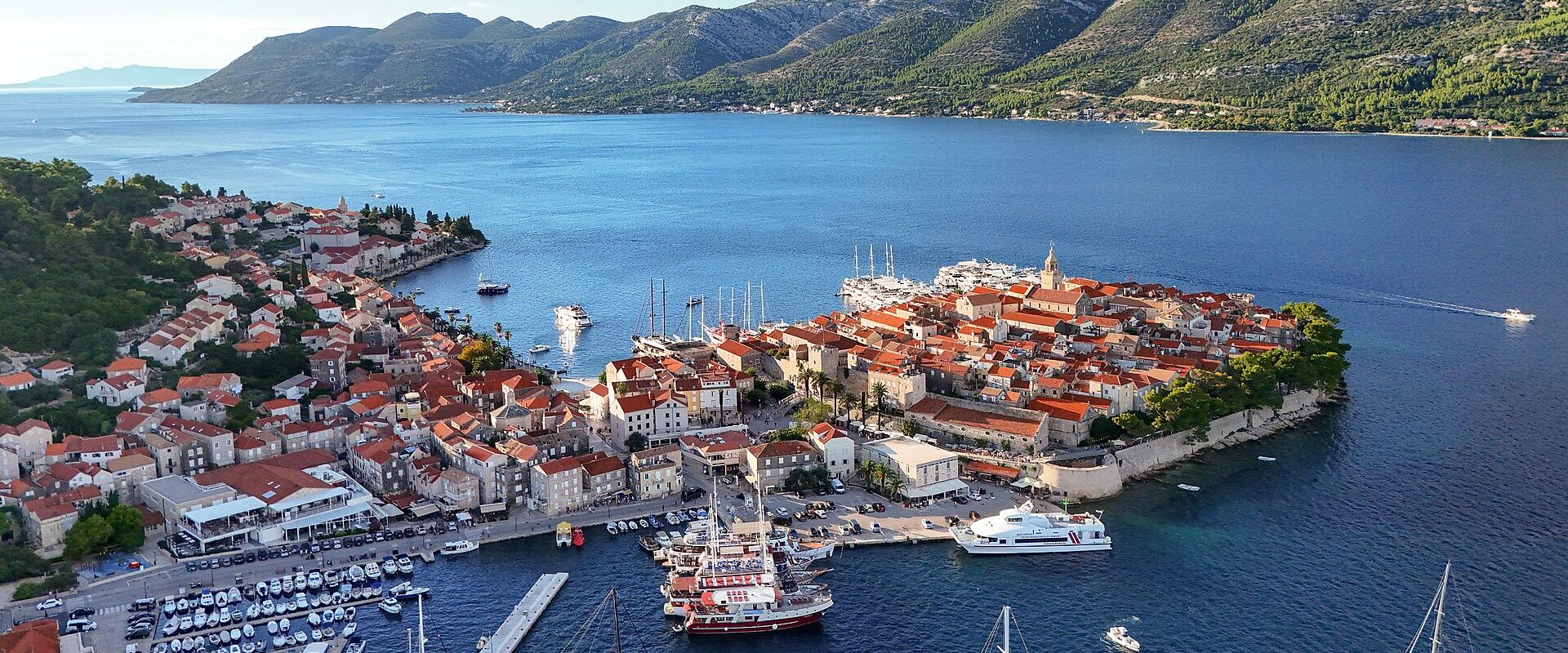
Dalmatian island with medieval towns, vineyards, and beaches
The coastline is dotted with beaches and coves, among them Pupnatska Luka, Vela Pržina and the sandy bays of Lumbarda. Lumbarda’s sandy bays are unusual in Dalmatia and are surrounded by vineyards where Grk grapes grow in sandy soil. The clear water is good for swimming, snorkelling, kayaking and sailing, and boat tours run to nearby islets and hidden bays. Moro Beach Club, on the islet of Stupe in the Korčula archipelago, is one of the places that draws visitors to the water in summer. The villages of Lumbarda, Vela Luka and Račišće offer a slower pace, traditional stone houses and local konobas serving fresh seafood, olive oil and regional wines.
Korčula is a good island for outdoor enthusiasts. Cycling and hiking trails wind through vineyards, forests and up to scenic viewpoints, while the island’s marinas and sailing centres make it a popular base for yachting and regattas. Cultural life is lively, with summer festivals, open-air concerts and performances of the Moreska sword dance, which tells the story of a battle between Moors and Christians and is staged in the old town in season. Art galleries, museums and artisan workshops show the island’s creative side and heritage.
Wine and food are a strong reason to explore. Grk is a dry white grown around Lumbarda, and Pošip is grown in the villages near Smokvica and Čara, so a day trip through the interior can combine tastings with lunch in a village konoba. The island also produces olive oil and fish, and shellfish are served in many family restaurants.
Venetian-era fortified town on Adriatic coast
15th-century defensive tower guarding Korčula harbor
Medieval gateway marking Korčula Old Town entrance
Exclusive boat-access beach club with sea swing
Birthplace of explorer Marco Polo on Korčula
13th-century stone gate and tower with Venetian lion
Venetian medieval tower with historic coats of arms
15th-century defensive tower with Adriatic views
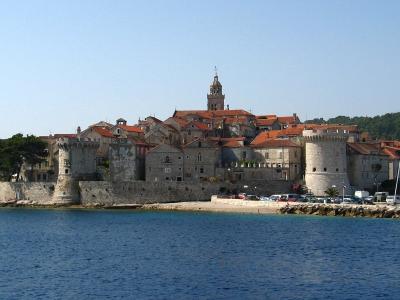
Korčula’s history stretches back to the 4th century BCE, when Greeks settled the island, and it later became a Roman and Venetian stronghold. Its position on a sea route made it a centre for trade, shipbuilding and stonework, and its residents developed customs that survive today, among them the Moreska sword dance and the production of Grk and Pošip wines. Korčula Town, the island’s historic centre, is a maze of stone streets, Gothic and Renaissance palaces and lively squares, laid out in a fishbone pattern designed to break the wind. The landmarks include St. Mark’s Cathedral, with its ornate facade and bell tower, the Marco Polo House, which is claimed to be the birthplace of the famous explorer, and the Land Gate, or Kopnena Vrata, which welcomes visitors into the old town. Towers such as Kanavelić Tower, Zakrjan Tower and the Large Governor’s Tower, known as Veliki Revelin, recall the town’s defensive past, and the West Gate and the Town Museum of Korčula add more layers of history.
The island is accessible by ferry and catamaran from Split, Dubrovnik, and the Pelješac Peninsula, with main ports located in Korčula Town and Vela Luka. Once on the island, visitors can utilize local buses, taxis, and scooter rentals to get around.
The optimal period for visiting is from May to September, when the weather is warm and outdoor activities are in full swing. Alternatively, spring and early autumn offer mild temperatures and fewer crowds, making them excellent for hiking and sightseeing.
Korčula Town features St. Mark’s Cathedral with its ornate facade, the Marco Polo House claimed to be the explorer's birthplace, and the historic Land Gate. These landmarks are situated within a maze of stone streets, Gothic palaces, and lively squares.
The island boasts clear turquoise waters ideal for swimming, snorkeling, and sailing, along with beaches like Pupnatska Luka and Vela Pržina. Outdoor enthusiasts can also enjoy cycling and hiking trails that wind through vineyards and forests to scenic viewpoints.
Visitors can experience unique customs such as the Moreska sword dance and enjoy regional Grk and Pošip wines. The villages of Lumbarda, Vela Luka, and Račišće offer traditional stone houses and konobas serving fresh seafood and olive oil.
EUR
Croatian