

Holy Trinity Church
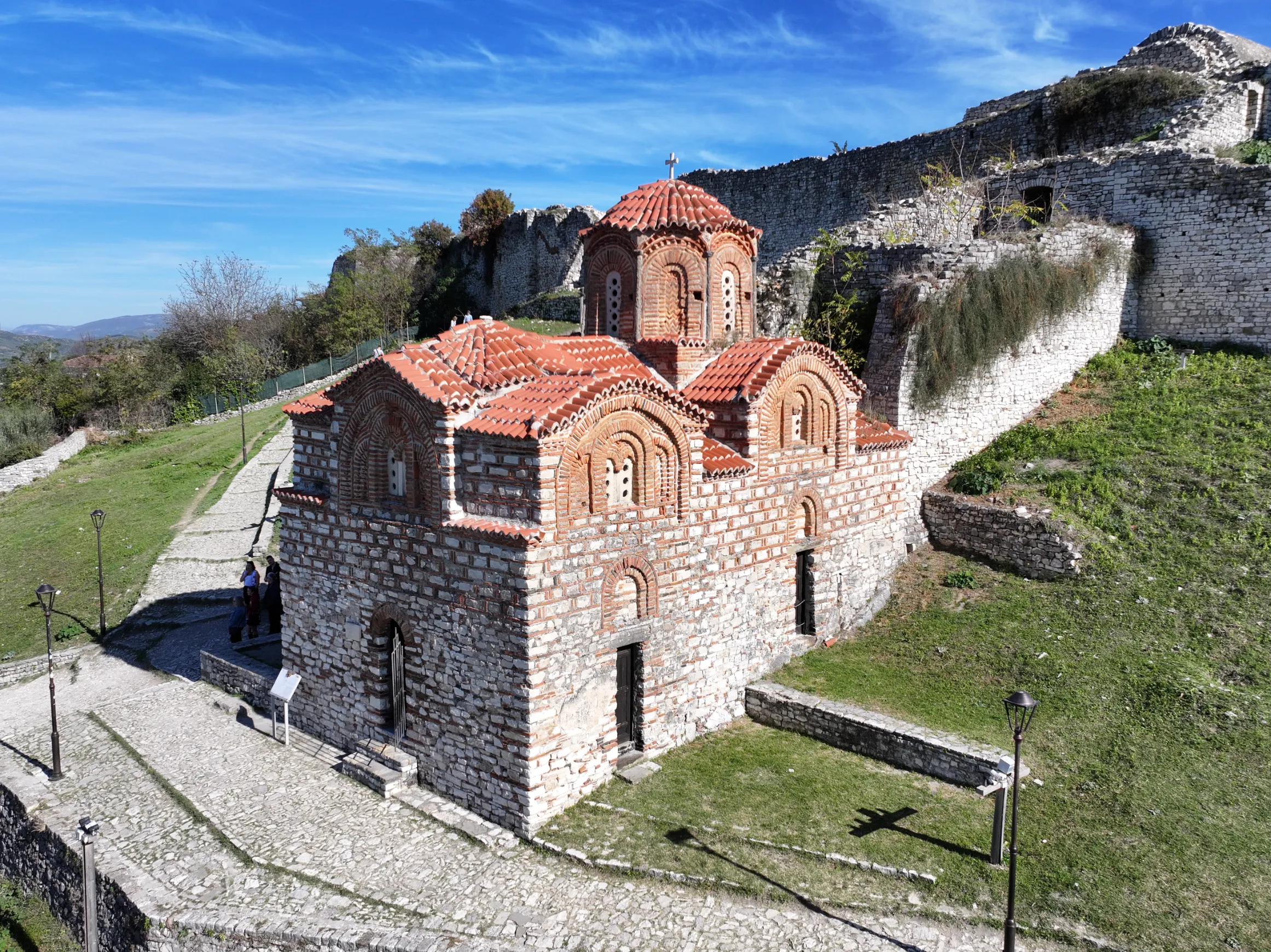
The Church of the Holy Trinity is located on the southern wall of the Berat Castle, and is one of the most representative monuments of Byzantine religious architecture in Albania. It is built on a rocky foundation, in a strategic and panoramic position that makes it visible from every corner of the city and beyond.
Built in the typical Byzantine style of a square cross, the octagonal dome resting on a low drum represents a rare harmony between mass and structural finesse. The church is divided into three parts: the narthex (antechamber), the nave (prayer space) and the altar, following the traditional organization of Orthodox churches of the period.
The exterior masonry is one of the most distinctive elements of this church, as it masterfully combines stone blocks with decorative red tiles, creating a rich and harmonious visual texture. This style of construction, known as “clausonazh”, is typical of Byzantine architecture of the late medieval centuries in the Balkans.
An inscription on the southern gate of the church dates the construction to the reign of Andronikos II Palaiologos (1282–1328), which places the church in an important historical context of the late Byzantine Empire and makes it one of the earliest buildings to survive in its complete form in Berat.
Inside, fragments of frescoes from the construction period are preserved, including scenes from the Nativity of Christ, depictions of the church fathers, angels, and saints, which testify to the artistic wealth and iconographic devotion of the period.
The Church of the Holy Trinity is today a protected cultural monument and represents a peak of post-Byzantine art and architecture in Albania. In addition to its historical and religious values, it remains one of the most visited destinations by domestic and foreign tourists exploring the heritage of Berat as part of UNESCO.