
The Western Balkans pack an incredible variety into a small area. In two weeks you can drink Bosnian coffee in an Ottoman bazaar, swim under a waterfall, walk the walls of Dubrovnik and watch the sunset over the Bay of Kotor, and none of the drives take more than about three hours.
This route starts in Sarajevo and ends on the Montenegrin coast. It works in reverse too, and you can fly in or out of Sarajevo, Dubrovnik, Tivat or Podgorica.
The route at a glance
| Days | Where | Highlights |
|---|---|---|
| 1–3 | Sarajevo | Baščaršija, history, Trebević, Lukomir |
| 4 | Sarajevo → Mostar | Konjic, Jablanica, the Neretva valley |
| 5 | Herzegovina | Blagaj, Počitelj, Kravica |
| 6 | Mostar → Trebinje | Stolac, the Herzegovina countryside |
| 7–9 | Dubrovnik | City walls, old town, islands |
| 10–11 | Bay of Kotor | Kotor, Perast, Our Lady of the Rocks |
| 12–13 | Budva and around | Beaches, Sveti Stefan, Lovćen, Cetinje |
| 14 | Departure | Tivat, Podgorica or Dubrovnik airport |
Days 1–3: Sarajevo
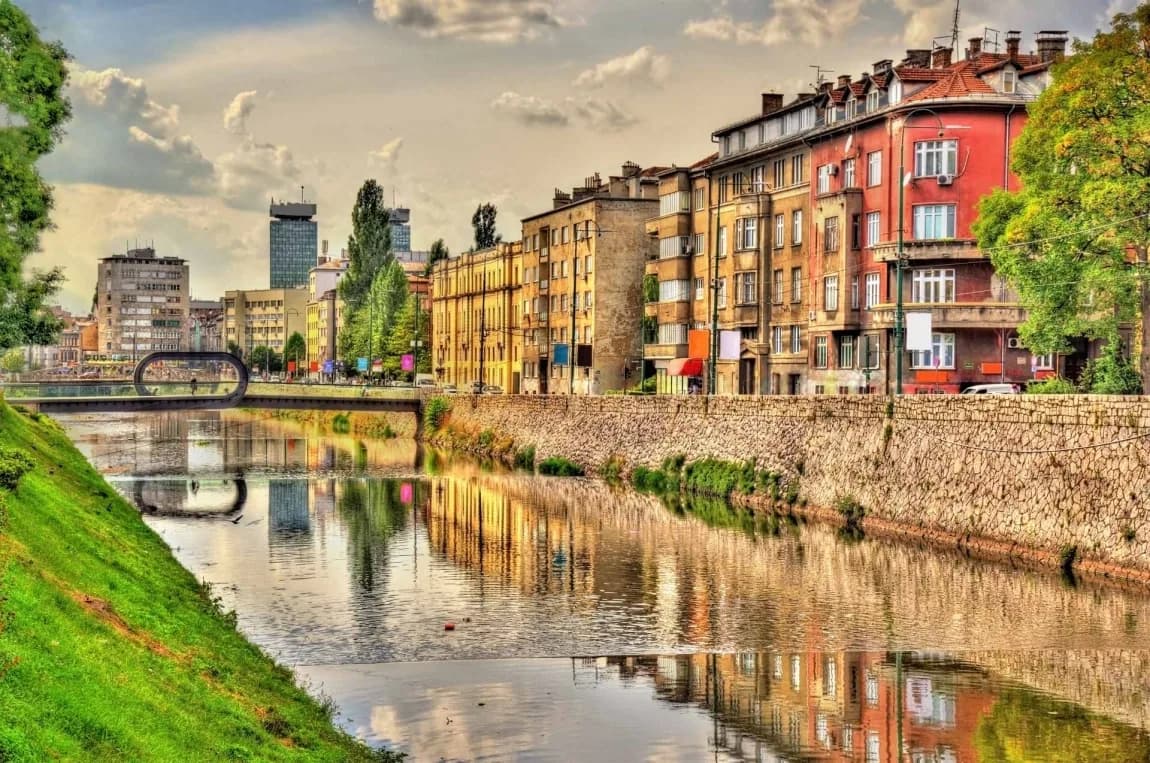
Start in Sarajevo, the most fascinating city in the region. Spend a day in the old town and the Austro-Hungarian centre, a day on history (the Latin Bridge, the City Hall, the Tunnel of Hope) and the Trebević cable car, and a third day in the mountains, for example in the village of Lukomir. Our list of 20 things to do in Sarajevo has more ideas.
Day 4: Down the Neretva to Mostar
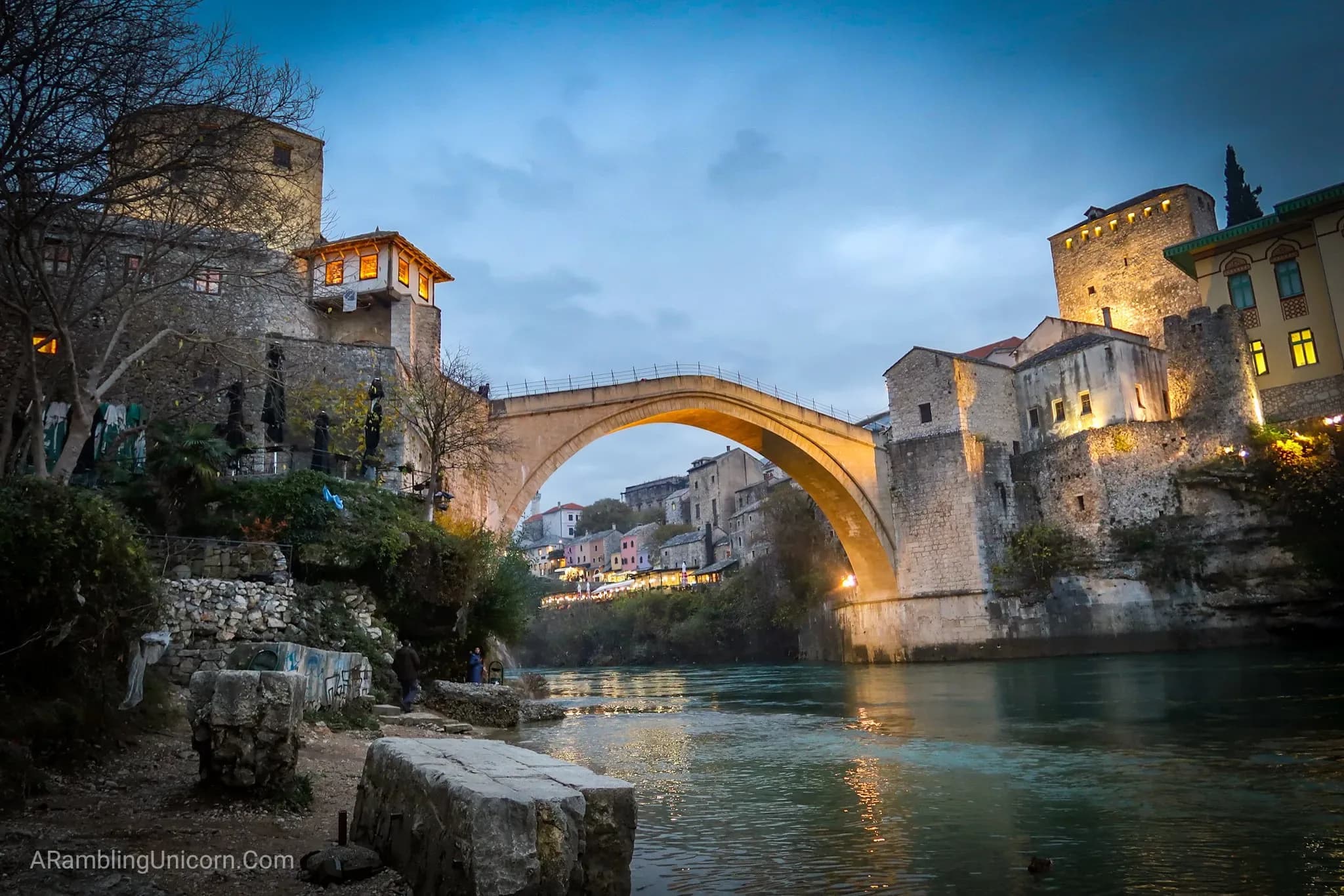
The drive (or train ride) from Sarajevo to Mostar follows the emerald Neretva through canyons and past lakes. Stop in Konjic and Jablanica on the way. In Mostar, stay in or near the old town to enjoy the Old Bridge in the evening. All the options are in our Sarajevo to Mostar guide.
Day 5: The Herzegovina loop
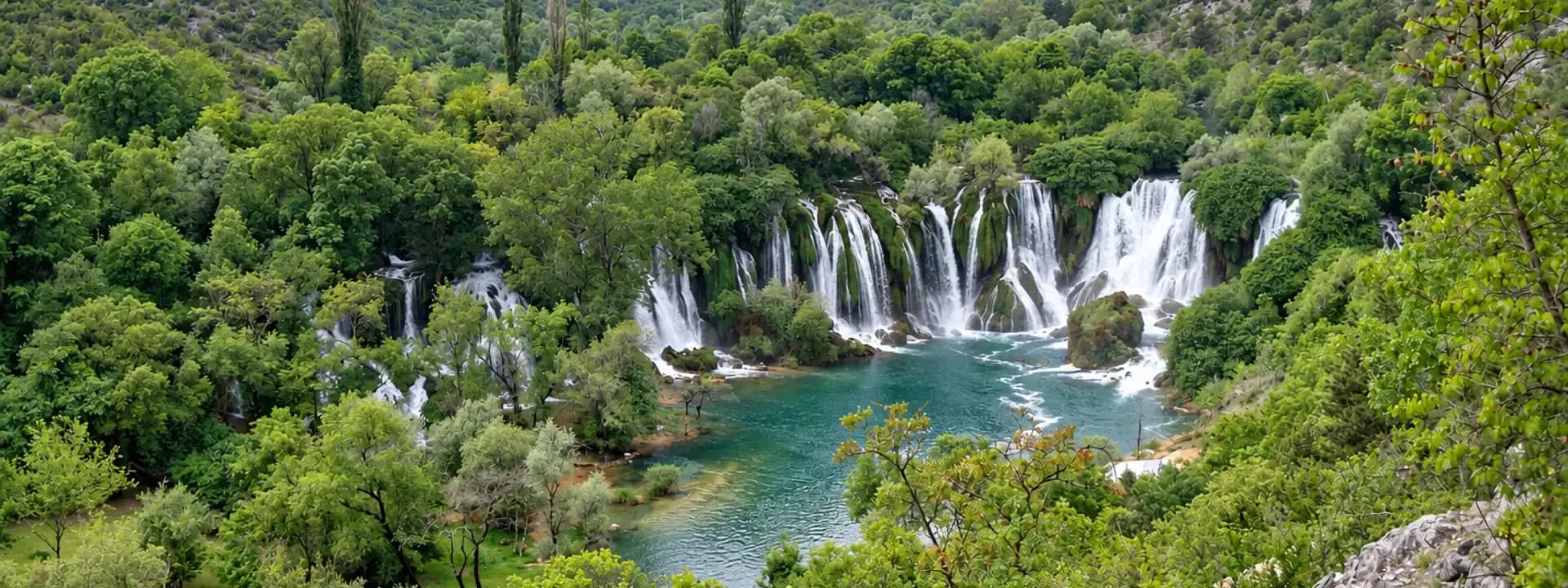
A day for three of the most beautiful places in the country: the dervish house of Blagaj at the source of the Buna, the stone village of Počitelj, and the Kravica waterfall, where you can swim from late spring to early autumn.
Day 6: Mostar to Trebinje
Instead of driving straight to the coast, take the inland road through the stone landscapes of eastern Herzegovina. Stop in Stolac to see the medieval stećci tombstones at Radimlja (a UNESCO World Heritage site), then continue to Trebinje, a sunny town of plane trees, an Ottoman stone bridge and excellent local wine. It is about two and a half hours of driving in total, and Trebinje is only around 30 km from Dubrovnik.
Days 7–9: Dubrovnik
Cross into Croatia and spend three nights in Dubrovnik. Walk the city walls early in the morning before it gets hot and crowded, take the cable car up Mount Srđ for the view, and spend a day on the islands: Lokrum is a short boat ride away, and the Elaphiti islands make a relaxing boat trip.
Tip: Dubrovnik is busiest when cruise ships are in port. Check the cruise calendar and plan the old town for the quieter days.
Days 10–11: The Bay of Kotor
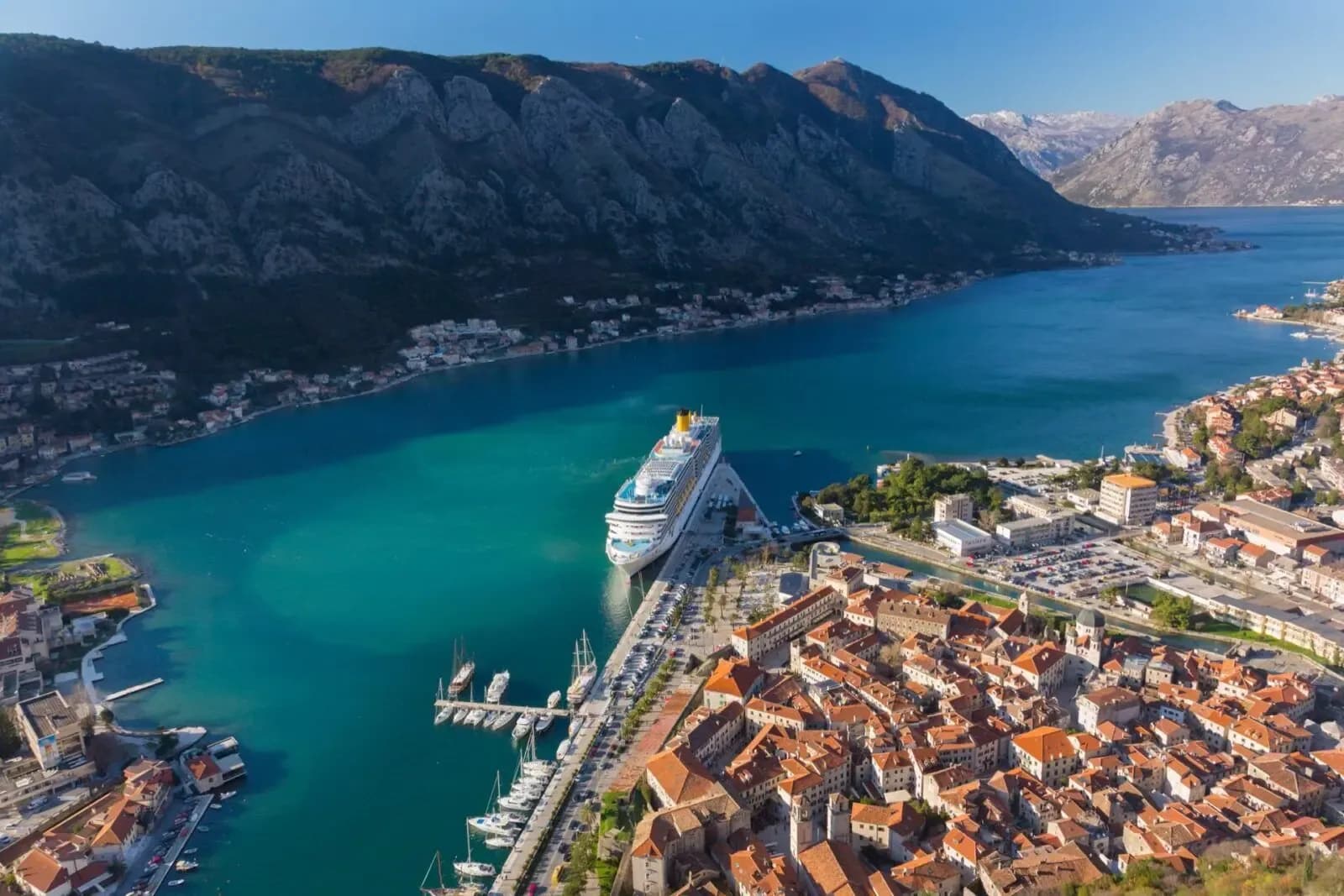
The drive from Dubrovnik to Kotor takes about two hours, plus the border crossing into Montenegro, which can be slow in summer. The Bay of Kotor is one of the most dramatic coastlines in Europe, with mountains rising straight out of the water.
- Explore Kotor's walled old town, a UNESCO World Heritage site, and climb the steps to the fortress for the classic view of the bay.
- Visit the baroque village of Perast and take a boat to the island church of Our Lady of the Rocks.
- Drive slowly around the bay road: every bend has a view.
Days 12–13: Budva, Sveti Stefan and Lovćen
Move to the open coast at Budva for a couple of beach days, with the photogenic island village of Sveti Stefan nearby. For a change of scenery, drive up the serpentine road to Lovćen National Park and the mausoleum of Njegoš, and visit Cetinje, the old royal capital of Montenegro.
Day 14: Departure
Tivat airport is 20 minutes from Kotor and about half an hour from Budva. Podgorica has more year-round flights, and Dubrovnik is a two to three-hour drive back.
Border crossings and cars
- You will cross two or three borders. Croatia is in the EU and the Schengen area, while Bosnia and Herzegovina and Montenegro are not, so passports are checked each time.
- Tell your rental company you will drive in all three countries, and make sure you have the insurance papers (green card). One-way rentals between countries usually have a high drop-off fee, so a private driver can work out better value.
- In summer, cross borders early in the morning to avoid queues.
- If you drive the Croatian coast from Split to Dubrovnik, the Pelješac bridge (opened in 2022) lets you skip the short Bosnian coastline at Neum. You can still choose to go through Neum if you want a stop there.
How to adapt the route
- Start in Croatia: fly into Split, drive to Mostar (about 2.5 hours), then Sarajevo, and continue as above.
- More nature: add Jajce and the Pliva lakes, or the Una National Park, from our 7-day Bosnia itinerary.
- More countries: add Albania's coast from Montenegro, or Serbia and Belgrade from Sarajevo.
- Less driving: drop Budva and spend the last days in the Bay of Kotor.
When to go
May, June and September are ideal: the sea is warm enough to swim from June, and the old towns are less crowded than in July and August. Read more in our guide to the best time to visit Bosnia and Herzegovina.
Book it as a tour
Prefer to have it all organised, with a private driver-guide, hotels and border crossings taken care of? See our multi-country tours such as One Tour, Four Countries, Discover the Western Balkans and the Balkan Odyssey, or ask us to design a route around your dates.