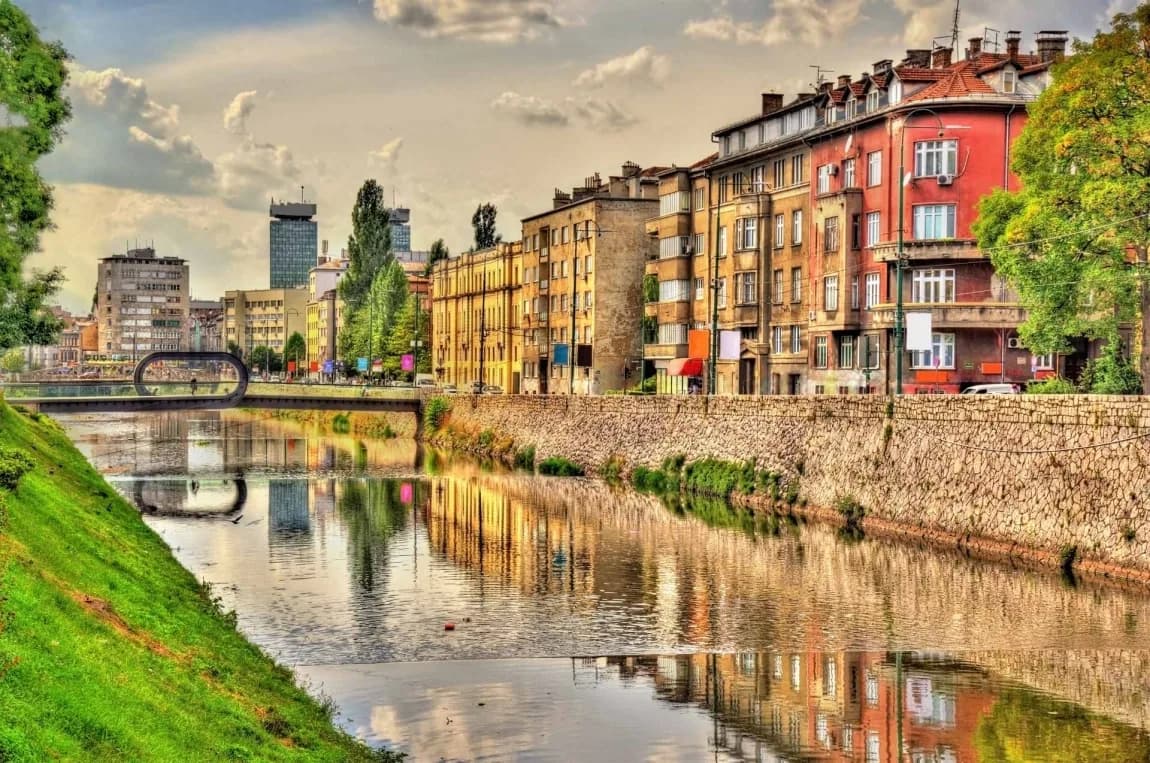

Sarajevo is a compact city. Most of the sights are in the old town and along the river Miljacka, so you can see a lot in two or three days on foot. What makes it special is how close everything is: a mosque, a Catholic cathedral, an Orthodox church and a synagogue stand within a few minutes' walk of each other, and in ten steps you go from an Ottoman bazaar to a Viennese boulevard.
Here are our favourite things to do, from the classics to the places visitors often miss.
The old town
1. Get lost in Baščaršija
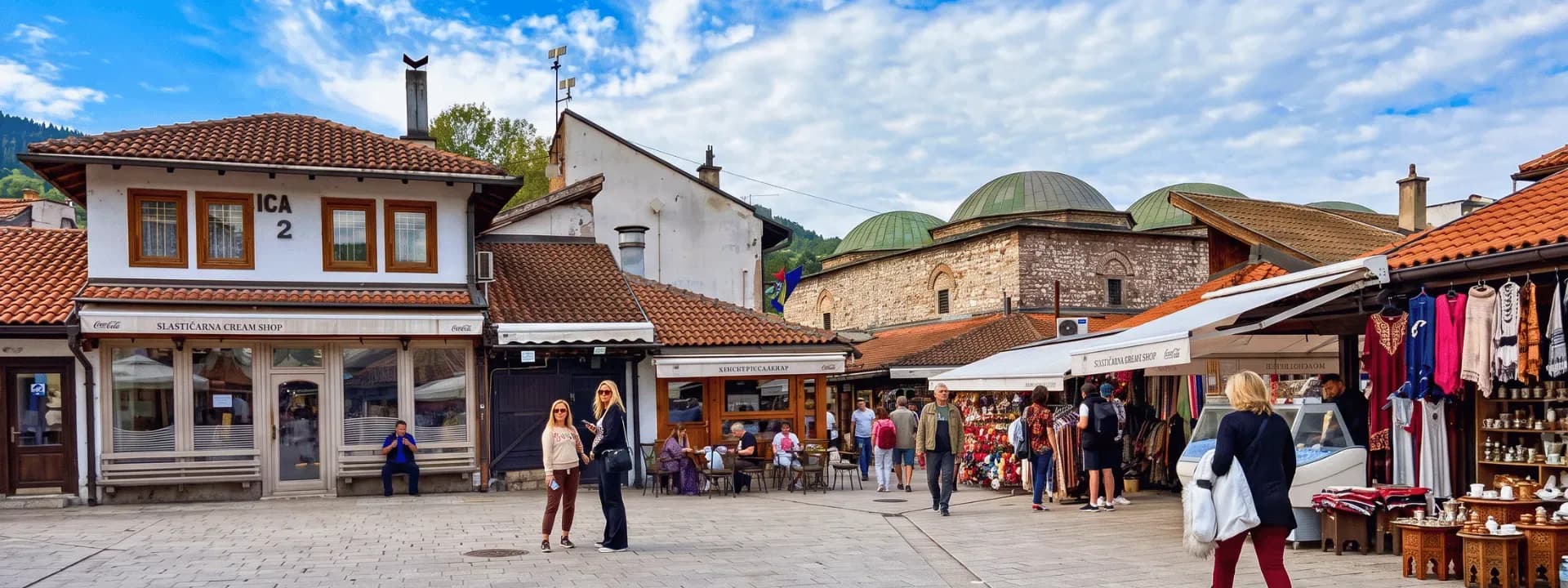
Baščaršija is the old Ottoman bazaar, founded in the 15th century. It is a maze of narrow lanes, copper workshops, small mosques and cafés. Come once during the day for the bustle and once in the evening when it is lit up.
2. Drink from the Sebilj
The wooden Sebilj fountain in the main square is the city's best-known landmark, and a pigeon-filled meeting point. Local legend says that whoever drinks from it will return to Sarajevo.
3. Visit the Gazi Husrev-beg Mosque
Built in the 1530s, the Gazi Husrev-beg Mosque is the most important Ottoman building in Bosnia. Visitors are welcome outside prayer times. Dress modestly; scarves are available at the entrance for women.
4. Watch the coppersmiths in Kazandžiluk
This short street is still full of craftsmen hammering coffee sets, trays and lamps by hand. It is the best place to buy a traditional Bosnian coffee set to take home.
5. Stand where East meets West
On Ferhadija street, a line on the pavement marks the meeting of the Ottoman and the Austro-Hungarian city. Look one way and you see the bazaar; turn around and you see 19th-century European facades.
History you can feel
6. The Latin Bridge
On 28 June 1914, Archduke Franz Ferdinand was assassinated at the corner by the Latin Bridge, setting off the First World War. A small museum on the corner tells the story.
7. The City Hall (Vijećnica)
The striped neo-Moorish City Hall was the national library until it was shelled and burned in 1992. It has been restored and reopened in 2014, and its interior is one of the most beautiful in the Balkans.
8. The Tunnel of Hope
During the siege of 1992 to 1995, an 800-metre tunnel dug under the airport runway was the city's only link to the outside world. At the Tunnel of Hope museum you can walk through a preserved section. It is near the airport, so it fits well on your arrival or departure day.
9. Look for the Sarajevo Roses
Across the city, scars left by mortar shells in the pavement were filled with red resin as memorials. They are easy to walk past, so look down.
10. Visit the War Childhood Museum and Galerija 11/07/95
Two small museums that move almost everyone who visits: one tells the war through the objects and memories of people who were children at the time, the other is dedicated to the victims of Srebrenica.
Views and the outdoors
11. Sunset at the Yellow Fortress
Walk up through the old Muslim neighbourhood of Vratnik to the Yellow Fortress (Žuta tabija). At sunset half the city comes here, and during Ramadan it is where the cannon marks the end of the daily fast.
12. Take the Trebević cable car
The cable car, reopened in 2018, takes you from the old town up Trebević mountain in a few minutes. At the top there are walking trails, cafés and wide views over the valley.
13. Walk the abandoned Olympic bobsleigh track
From the cable car, a short walk through the forest leads to the 1984 Olympic bobsleigh track. Today it is a winding concrete gallery covered in graffiti.
14. Day trip to Lukomir
High on Bjelašnica mountain, Lukomir is one of the highest and most remote villages in the country, with stone houses and shepherds who still live a traditional life. It is a beautiful drive or hike from Sarajevo between late spring and autumn.
Food and coffee
15. Eat ćevapi
Small grilled minced-meat sausages served in a soft somun bread with raw onion and kajmak. You will find a ćevabdžinica on almost every corner of Baščaršija. Ask for "pola porcije" (half portion) if you aren't very hungry.
16. Order burek, the right way
In Bosnia, burek means a pie filled with meat. The same pastry with cheese is sirnica, with spinach zeljanica, and with potato krompiruša. Locals will happily correct you.
17. Slow down with Bosnian coffee
Bosnian coffee comes in a small copper džezva with a sugar cube and a piece of rahat lokum. It is not something to rush: sitting over one cup for an hour is part of the culture.
18. Try begova čorba and a Sarajevo beer
Begova čorba ("the bey's soup") is a creamy chicken and okra soup. Pair it with a beer from the Sarajevo Brewery, which has been brewing since 1864.
Beyond the old town
19. See the city's houses of faith
Within a short walk: the Catholic Cathedral of Jesus' Heart, the Orthodox Cathedral and the Old Orthodox Church, the Old Synagogue (now the Jewish Museum) and the Baščaršija Mosque. Our religious tourism guide covers them in more detail.
20. Ski where the Olympians did
In winter, the 1984 Olympic mountains Jahorina and Bjelašnica are less than an hour from the city and among the best-value ski resorts in Europe.
How many days do you need in Sarajevo?
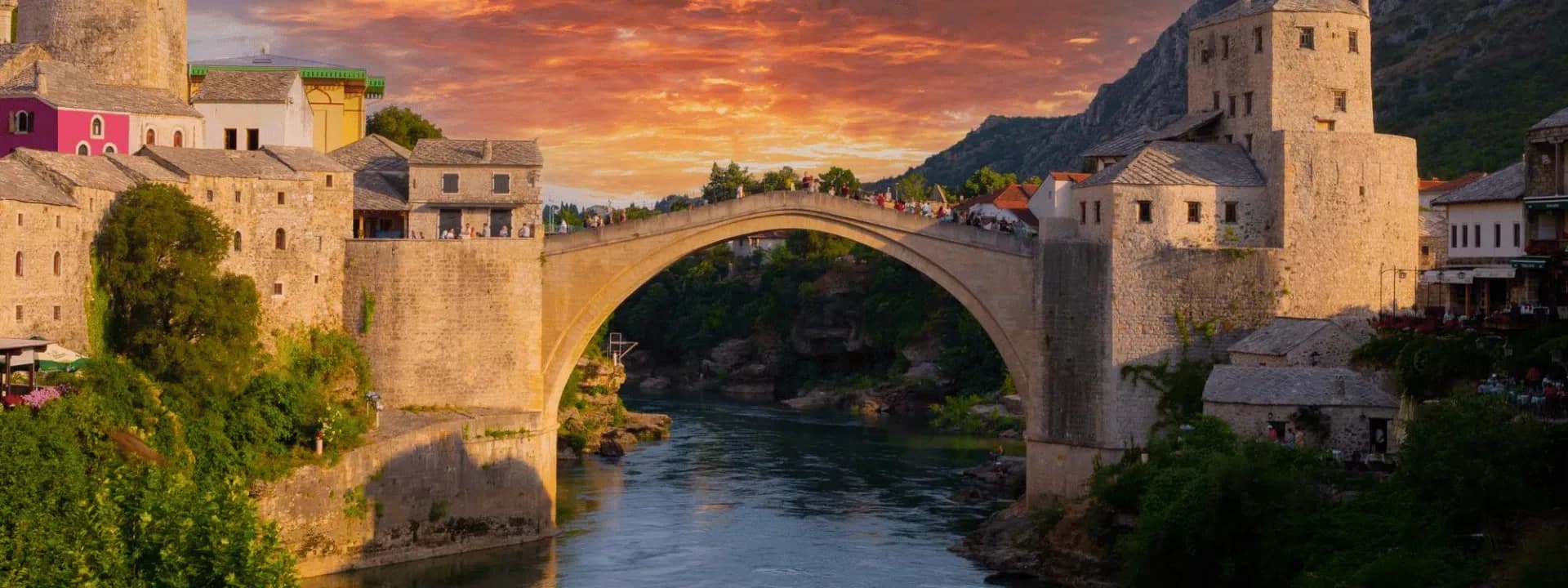
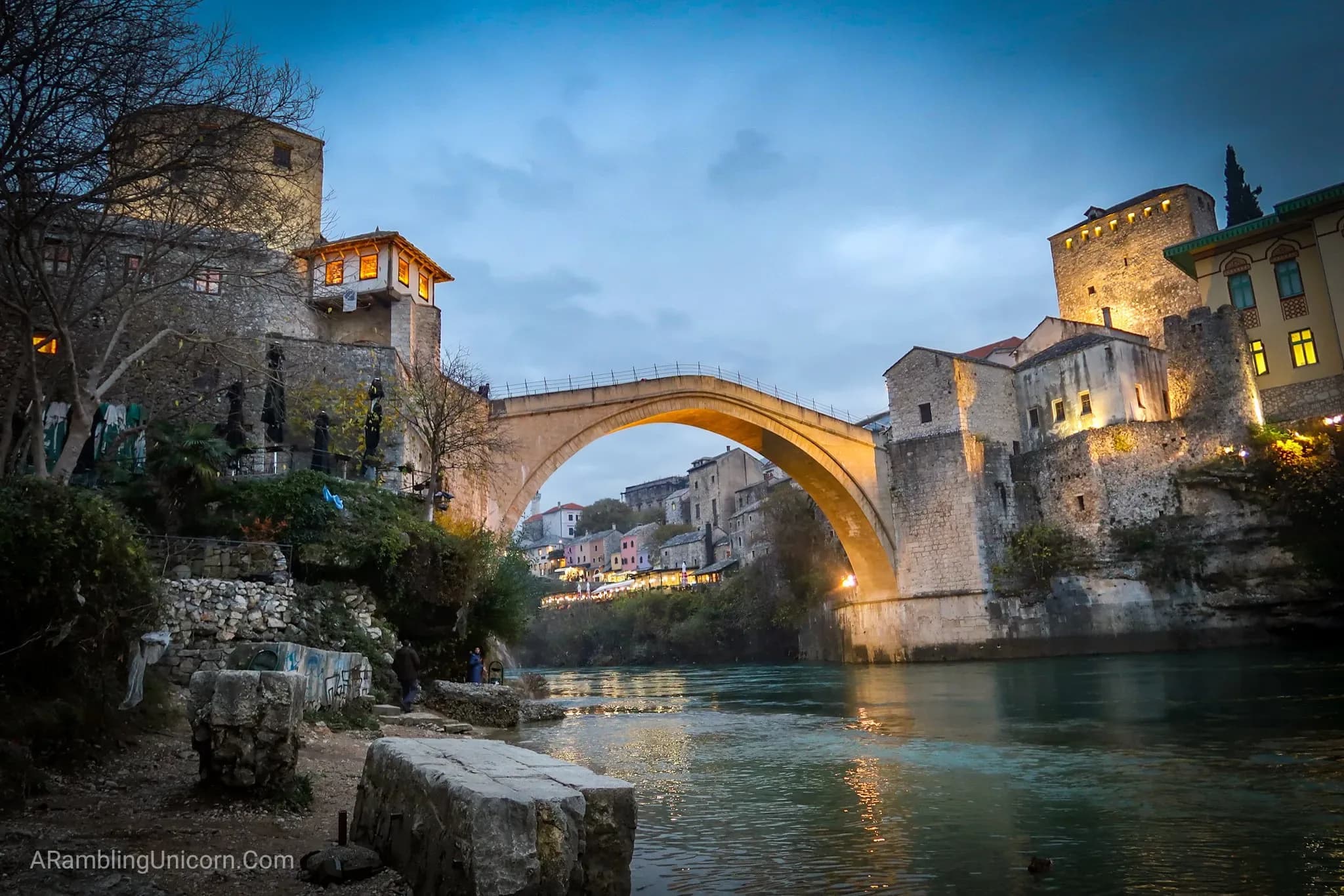
Two full days cover the old town, the history and a trip up Trebević. Three days lets you add Lukomir or a day in the mountains, and a relaxed evening or two in the cafés. Many visitors combine Sarajevo with Mostar. See our guide to getting from Sarajevo to Mostar and our 7-day Bosnia itinerary.
Practical tips
- Money: the currency is the convertible mark (KM or BAM), pegged to the euro at about 1.96 KM per euro. Cards are widely accepted, but keep some cash for small bakeries and cafés.
- Getting around: the old town is walkable. Trams run along the main valley road, and taxis are inexpensive. Use a metered taxi or an app.
- Water: tap water in Sarajevo is safe to drink, and the public fountains in the old town are drinkable too.
- Dress code: shoulders and knees covered for mosques and churches. Otherwise, dress as you would in any European city.
Want a local guide or a ready-made plan? Have a look at our Sarajevo city guide and Sarajevo tour, or ask us to plan your stay.