

Discover North Macedonia
A little closer toStruga.
Plan your Struga escape: Drim quay, city beaches, cave monasteries, museums, poetry festival, food and tips for Lake Ohrid’s relaxed river town.
- Population
- River
- Founded
- Best Time
- Airport
About Struga
Struga
There is truly no other like Struga. Set on the northern shore of Lake Ohrid where the River Crn Drim spills into its midtown channel, Struga blends lake-life ease with centuries of culture and a famously poetic soul. Its ancient name, Enhalon—Greek for “eel”—hints at millennia of fishing tradition, while the modern city offers promenades, pebble beaches, and a relaxed rhythm that makes weekend plans melt into weeklong stays. If you’re mapping things to do in Struga, picture evenings on the quay, boat rides to cliffside chapels, and dinners above glassy water swimming with swans.
Struga sits about 14 km from Ohrid, on the plain of the Struga Field, wrapped by mountains—Jablanica to the west, Karaorman to the northeast, Galicica to the southeast. The geography and proximity to the lake give Struga a gentle climate and a theatre of winds, from cool northerlies that drift along the Drim to the mountain strmec that whispers down at night. In summer, the water warms nicely, and the riverfront becomes the city’s open-air living room.
Kališta Monastery (5 km SW)
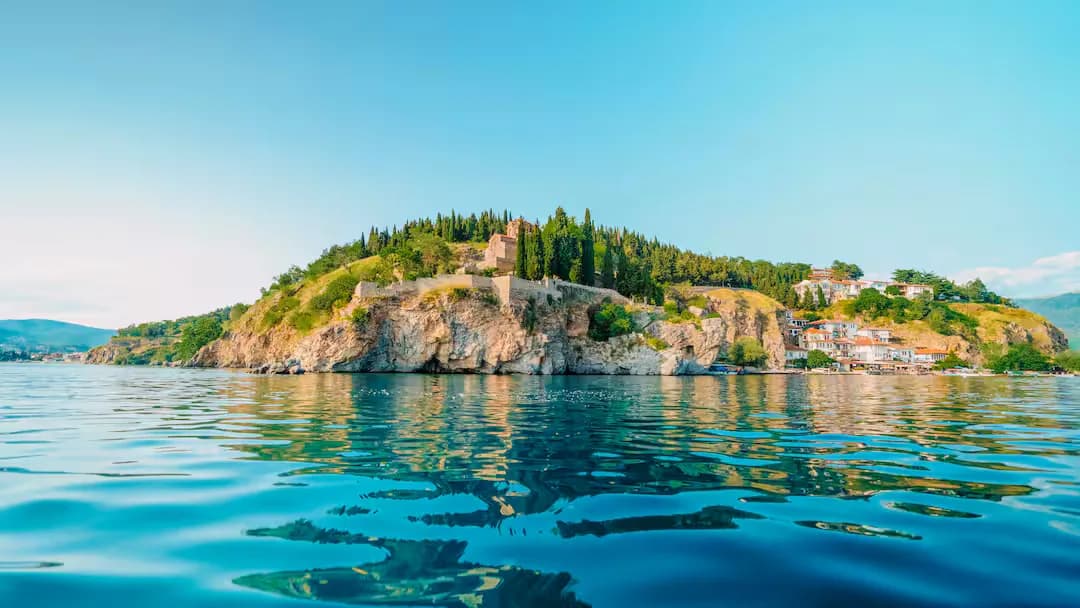
Right on the water in a rocky amphitheatre, the Monastery of the Nativity of the Holy Mother of God anchors a complex that includes a cave church for St. Athanasius and a newer church restored in 1977 upon 13th-century foundations. Monastic life continues here—dress modestly, move quietly, and let the lake’s hush do the talking.
Radožda Cave Church
A short taxi or boat ride west brings you to another cave sanctuary with frescoes from the 13th–14th centuries. Pair it with a lakeside lunch and a swim. Inland, the Church of Sveta Bogorodica in Vranishta is linked by tradition to Tsar Samuil.
Halveti Teke
This Sufi complex offers a contemplative counterpoint to Struga’s churches, its Ottoman-era architecture a reminder of the city’s cosmopolitan religious tapestry.
Every late August, Struga becomes the world’s most lyrical lakeside stage. The Struga Poetry Evenings gather international poets for readings, multimedia performances, workshops, and roundtables. Traditions abound: the opening nod to Konstantin Miladinov’s “Longing for the South,” an event in Ohrid’s St. Sophia, and a closing ceremony on the Bridge of Poetry across the Drim. The festival’s top honor—the Golden Wreath—is revered in literary circles, and laureates have included Nobelists and dissident voices alike. If you love words, time your visit to visit Struga, Macedonia when the city breathes poetry.
North Macedonian food in Struga leans sun-kissed and generous. Begin with shopska salad and makalo (a local garlic dip), share a spread of meze with bread warm from the oven, and move to slow-cooked lamb or clay-pot tavče gravče. Lake fish is a highlight; ask for daily specials. Pair dinner with a glass of Vranec (robust red) or a chilled spritzer, and close with baklava or walnut pastries by the water.
There’s also a delightfully Struga way to start the day: breakfast on a floating raft at the lake’s edge—coffee steaming, water glassy, swans gliding by.
Evenings are easygoing and photogenic. Stroll the riverfront, pause for a local beer at Barabar Mezebar, then shift to lakeside lounges where DJs mix sunset sets. Versus Beach Bar brings a boho glow to summer nights; farther down the shore, bean-bag perches turn into constellations of conversation. Prefer quiet? Find a café on the quay and watch as brave locals jump into the Drim—it’s a Struga tradition.
Start on the Crn Drim quay with coffee and a river breeze. Wander the Old Bazaar, then visit St. Gjorgji to meet icons older than most countries. After lunch lakeside, take a boat to Kališta for cave-church frescoes and a quiet hour on the monastery grounds. Swim from Male or Female Beach, rinse off in golden light, and settle into a table over the water as dusk bands the sky in pink and blue. If it’s late August, follow the voices to the Bridge of Poetry and end your night with a reading under the stars.
Maybe it’s the way the river cleaves the city and ties it together at once. Maybe it’s the winds that arrive from every compass point, polishing the air. Or maybe it’s that Struga treats visitors like neighbors—inviting you to walk, taste, listen, and linger. If you’re charting the best places to visit in Struga or sketching out things to do in Struga, remember this: start at the water. The rest—poems, chapels, swims, and conversations—will find you.
Explore Struga
The Crn Drim Quay
Struga’s signature stroll follows the river right through the city. Benches, shade, and three pretty bridges offer constant lake-and-river views, with the famed outflow beside Hotel Drim a favorite photo stop. The eastern quay bears the name Sergei Yesenin and hosts busts of poets Adam Mickiewicz and Aco Šopov—an overture to Struga’s literary spirit.
City Beaches: Male, Female, and Galeb
Names aside, everyone is welcome. These stony strands are an easy walk from the center, with clear, slightly warmer water than other parts of the lake. Rent a lounger and parasol or pop into a beach bar for an iced coffee, then wade back to the shallows where the Drim curls past.
Church of St. Gjorgji (1835)
The city cathedral stands on older 16th-century foundations and shelters late-19th-century frescoes, but its real treasure is a luminous icon gallery spanning the 13th–19th centuries. Don’t miss the famed St. Gjorgji icon dated 1267, whose long inscription reads “Struga Ohridska.”
National Museum “Dr. Nikola Nezlobinski”
Founded in 1928 by a Russian émigré physician, the museum began as a natural sciences collection and grew into a multidisciplinary trove. Expect pinned butterflies, birds, and fish from the Ohrid–Prespa region, plus archaeology from prehistory to medieval times and an art gallery dedicated to local painter Vangel Kodžoman.
Memorial House of the Miladinovci Brothers
Renovated on its historic foundations, this intimate museum honors Dimitar and Konstantin Miladinov, collectors of folk songs and champions of Macedonian letters. Their legacy resonates every August during Struga’s biggest cultural event—the Poetry Evenings.
Nature & Outdoor Activities: Lake Days and Mountain Breezes
Summer days in Struga are made for water. Swim from the city beaches, hire a small boat, or join a gentle cruise along the shore. The local winds create a rhythm: cool northerlies slip along the Drim, while spring’s southerlies bring fishermen luck for eel and bleak. In the mountains above 1,600 m, winter temperatures dip below zero from December into March, but down by the lake winter is usually mild and walkable. For explorers, short rides take you to Radožda for cliff-hugging paths and chapel visits, or out to quiet coves under Galicica’s slopes. Paddleboards and kayaks are increasingly available in high season. If you prefer wheels, rent a bike and trace the lakeside paths; if you prefer views, take a boat out at golden hour and watch the village lights wink on.
History & heritage
History & Culture: Eels, Winds, and the Word “Struga”
The first mention of Struga under its Slavic name appears in the 11th century, but life here began much earlier—Neolithic settlements took advantage of the lake and of Via Egnatia, the Roman road that stitched east to west. Locals and scholars offer several etymologies for the city name. Some point to sheep-shearing and milking practices (strig/struga) once held near the mouth of the Drim. Others tie it to a river sleeve or branch, fitting for a town defined by its watercourses and traditional fishing installations, the daljans. Whichever you choose, Struga’s identity is inseparable from its winds, its river, and the steady pulse of the lake.
Practical travel tips
Explore North MacedoniaShopping & Souvenirs: Markets, Makers, and Easy Prices
Struga is friendly on the wallet. The Old Bazaar spills into markets where you can browse seasonal produce, herbs, and honey from nearby villages. Gift shops carry hand-painted terracotta, silver filigree, and embroidered textiles; clothing boutiques are great for breezy summer outfits. Keep an eye out for icons and small religious art near churches and monasteries—buy only from reputable sellers and respect sacred imagery.
Getting There & Around
Struga sits less than 20 minutes by road or bus from Ohrid. In town, everything is walkable: beaches, bazaar, river, and restaurants. For villages and monasteries, taxis are inexpensive; boats add romance and shortcuts along the shore.
When to Visit
July–August bring classic beach weather and lake temperatures that can touch the mid-20s °C, with long twilights and a festival buzz. Spring and autumn mean fewer crowds and soft light perfect for photographers. Winters are mild by the lake, with alpine chill reserved for the surrounding peaks.
What to Pack
Comfortable shoes for promenades and chapels, swim gear for lake days, and a light layer for evening breezes. Modest attire is appreciated in religious sites; a scarf comes in handy.
Good to Know
Smoking is permitted on many terraces and balconies in North Macedonia. Tipping is appreciated but not obligatory; 5–10% is a kind gesture for good service.