

Discover North Macedonia
A little closer toSkopje.
North Macedonia's capital on the Vardar: an Ottoman bazaar, a hilltop fortress, bold modern architecture and mountains on the doorstep.
- Population
- 526,502 (2021 census)
- River
- Vardar
- Founded
- Roman Scupi
- Best Time
- May – October
- Airport
- Skopje International (SKP)
About Skopje
A capital of contrasts
Skopje is the political, economic and cultural heart of North Macedonia. Spread along the banks of the Vardar River and surrounded by mountains, the capital brings together ancient ruins, Ottoman heritage, Orthodox churches, mosques, socialist-era modernism and contemporary urban life.
The Vardar divides the city's best-known districts. The Old Bazaar and Kale Fortress stand on the northern bank, while Macedonia Square, the main shopping streets and much of the modern centre lie to the south. The Stone Bridge joins the two, and crossing it is the easiest way to feel how many different periods have shaped the city.
Skopje is not a city of one style. Within a short walk you can move from a medieval fortress to an Ottoman bazaar, from Orthodox and Islamic architecture to bold Brutalist buildings from the rebuilding after the 1963 earthquake, and on to busy cafés and riverside promenades. Its character comes from that contrast.
Nature is close as well: Vodno Mountain rises directly south of the centre and Matka Canyon is a short drive away. With around 526,000 residents, Skopje is by far the country's largest city and the main arrival point for most visitors to North Macedonia.
Explore Skopje
Stone Bridge
The most recognisable landmark in Skopje crosses the Vardar between Macedonia Square and the Old Bazaar, linking the modern and historic sides of the capital. It also appears on the city's coat of arms.
Old Bazaar
One of the largest and best-preserved bazaars in the Balkans, stretching from the Stone Bridge to Bit Pazar. Craft streets, mosques, hammams, galleries, tea houses and kebab shops make it a living part of the city, not an open-air museum.
Kale Fortress
The hilltop fortress above the Vardar is the nucleus of present-day Skopje. Walk the walls for views over the bazaar, the river and the mountains around the valley.
Mustafa Pasha Mosque and the Ottoman hans
Among the finest Ottoman monuments in the city: Mustafa Pasha Mosque, the Daut Pasha and Čifte hammams (now art galleries) and the old inns Kuršumli An, Suli An and Kapan An.
Mother Teresa Memorial House
A memorial and small museum in the centre, near the place where the church of her baptism stood before the 1963 earthquake.
Museum of the City of Skopje
Housed in the surviving part of the old railway station, whose damaged façade is one of the capital's most powerful symbols. The displays follow the city from prehistory to today.
Macedonia Square and the Vardar waterfront
The main square and the riverside around it, with monuments, bridges, museums and the newer façades that changed the look of the centre.
Modernist and Brutalist Skopje
The post-earthquake rebuilding left a remarkable set of buildings, such as the Central Post Office, the Telecommunications Centre and the City Wall housing blocks. They divide opinion, and they are essential to the city's identity.
Vodno Mountain
The mountain on the city's doorstep. Its Krstovar summit, at about 1,066 metres, gives the widest view over Skopje and is a favourite weekend escape.
Matka Canyon
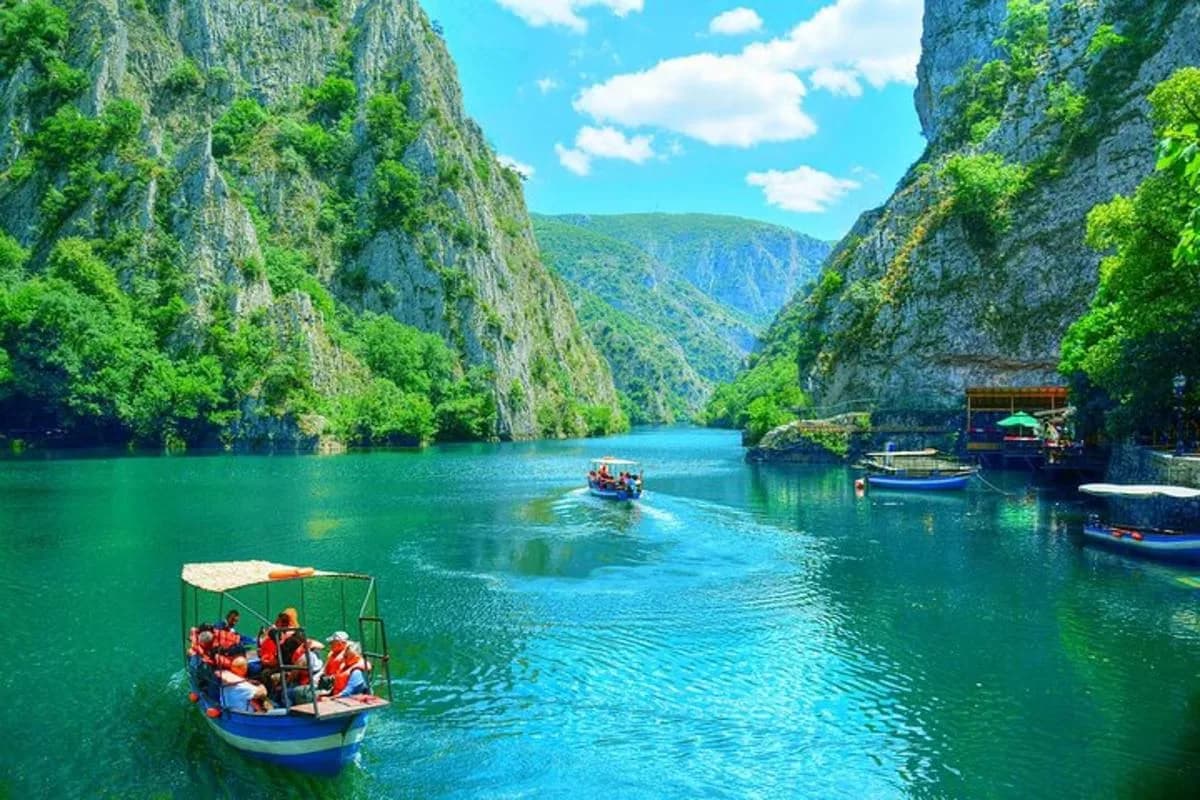
South-west of the centre: cliffs, the Treska River, caves, medieval monasteries, boat trips and hiking trails. The capital region's best-known natural attraction.
History & heritage
From Roman Scupi to a city rebuilt
People have lived in the Skopje valley for thousands of years. The ancient city of Scupi grew up north-west of today's centre and became an important Roman settlement, helped by its position on the routes between the inner Balkans and the Aegean.
In the Middle Ages Skopje changed hands between regional powers and developed as a fortified town around Kale Fortress, on a hill above the Vardar. Centuries of Ottoman rule followed and left the Old Bazaar: a quarter of mosques, hammams, caravanserais, workshops and trading streets that is still in daily use.
The turning point of modern Skopje came on 26 July 1963, when a magnitude 6.0 earthquake devastated much of the city. Help arrived from around the world, and the reconstruction, with a master plan by the Japanese architect Kenzo Tange, became a symbol of international solidarity. The surviving half of the old railway station, now the Museum of the City of Skopje, keeps that memory alive.
Skopje is also the birthplace of Mother Teresa, born here in 1910 as Anjezë Gonxhe Bojaxhiu, and remembered at the memorial house in the city centre.
Practical travel tips
Explore North MacedoniaGetting there and around
Skopje International Airport, the central bus station and the main north–south and east–west roads connect the city with the rest of North Macedonia and the neighbouring countries. The centre, the Stone Bridge and the Old Bazaar are easy to explore on foot.
Neighbourhoods to know
Centar holds Macedonia Square, museums and the main shopping streets. The Old Bazaar, in Čair, is the historic Ottoman quarter. Debar Maalo is the place for cafés, traditional restaurants and evenings out, and Karpoš and Aerodrom are the big residential districts.
Food and coffee
Try tavče gravče, kebapi, pastrmajlija, burek, shopska salad and ajvar, followed by Turkish sweets. The Old Bazaar is known for kebapi, burek and Turkish coffee, and Debar Maalo for traditional restaurants. Coffee culture is a big part of local life.
A multicultural city
Macedonian, Albanian, Turkish, Roma, Serbian, Bosniak, Vlach and other communities have shaped Skopje. Mosques are found throughout the city, especially in and around the Old Bazaar, alongside Orthodox churches and Catholic institutions.
Culture and events
The capital is home to most of the country's major museums, galleries and theatres, with film, theatre and music festivals and open-air events through the summer.
The city's rhythm
Skopje is more relaxed than many larger European capitals, although central roads and shopping districts are busy during working hours. Evenings are for a walk beside the Vardar or in City Park.