

Discover North Macedonia
A little closer toPrilep.
Plan your Prilep trip: Marko’s Towers, bazaar, Treskavec, Stibera, caves, beer fest, and day trips—your guide to Pelagonia’s storied city.
- Population
- River
- Founded
- Best Time
- Airport
About Prilep
Prilep
Set where rocky hills soften into the fertile Pelagonia Valley, Prilep is a city of stone and stories. Just 128 km southwest of Skopje on the A3, it’s known as “the city beneath Marko’s Towers”—a nod to the dramatic fortress ruins that crown the northern skyline. Prilep is also a place of resilience and pride: awarded the Order of the People’s Hero of Yugoslavia in 1975, with many locals recognized for their role in WWII. Today, its lively squares, artisan bazaars, and monastery-capped hills make it a rewarding stop for travelers seeking depth beyond the usual routes.
If you’re planning to visit Prilep, Macedonia, expect a city that blends ancient sites with everyday Macedonian warmth: tobacco leaves drying in autumn light, a slightly leaning clock tower presiding over the bazaar, and sunset strolls where granite boulders glow like embers. Here’s your friendly, insider guide to the best places to visit in Prilep and the practical tips to make it all effortless.
Treskavec Monastery (Sveta Bogorodica)
About 10 km north on a hilltop where eagles ride thermals, Treskavec pairs huge horizons with intimate artistry. Built over an ancient settlement (Kolobaise), the main church dates to the 14th century atop a 6th-century basilica footprint. Inside, look for a rare fresco of Christ as a youth, vivid saints, and time-darkened walls that reward slow looking. Dress modestly; bring a flashlight for shadowed corners. Reconstruction after a 2013 fire focused on non-church buildings—the church remains the soul.
Monastery of St. Archangel Michael (Varoš)
Folded into the rocky slopes below Marko’s Towers, this convent complex shows classic Ottoman-era architectural lines—whitewashed walls over stone, wood balconies and tiled roofs. Frescoes are bright and beautiful; photography rules can be strict. Nearby stands the roofless St. Atanas—a romantic ruin.
Churches in Town
- St. Annunciation (1838), the “Old Church,” a short stroll from the museum.
- St. Transfiguration / Metamorphosis (1871), also known as the Greek Church, with 19th-century grace.
- St. Cyril & Methodius, near Town Square Aleksandria—modest outside, gleaming chandeliers inside.
Stibera (Styberra)
Twenty kilometers southwest near Čepigovo, Stibera’s columns and foundations speak of a Hellenistic city that later thrived under Rome. Pair the visit with the Museum of Prilep’s artifacts to connect fragments to the whole.
Royal Tomb of Pavla Čuka & Visoka
Near Bonče, this 4th-century-BC tomb is believed to hold a Macedonian ruler. It’s wilder and more remote than Stibera—best with local directions and extra time. Nearby Visoka adds another archaeological layer (and a rewarding hike).
Prilep loves its public art. In the city park, look for fountains, a memorial plaque to singer Toše Proeski, and statues of national heroes. Across town, the Monument of King Marko stands sentinel. For a powerful WWII memorial, head to the Park of the Revolution to see “Burial Mounds of the Undefeated,” one of architect Bogdan Bogdanović’s striking, abstract spomeniks.
Tobacco Country
Tobacco thrives in the Pelagonian sun, and Prilep leaf remains prized by major manufacturers. Fields turn and drying racks appear in late summer and autumn; a Tobacco Museum near the route to Marko’s Towers (check hours ahead) tells the story from seed to trade.
Prilep Brewery (Prilepska Pivarnica)
Local pride pours as Zlaten Dab Lager, with darker brews and specials rounding out the lineup. On heat-hazed afternoons, the emerald bottles appear on most café tables. (Fun fact: the brewery also bottles well-known soft drinks for the Macedonian market.)
The Bazaar & Farmers’ Market
Shop for seasonal fruit and village vegetables under the market’s permanent overhang, then browse the bazaar’s side streets for everyday bargains and souvenirs.
Start with burek and yogurt for breakfast, then graze on shopska salad, ajvar, and tavče gravče (baked beans in a clay pot). Grilled kebapi, slow-cooked meats, and wood-fired breads round out rustic menus. Pair meals with a glass of Vranec (bold red) or Temjanika (aromatic white); finish with syrupy pastries and a short, strong coffee on the square.
- Pivofest (Beer Festival): A beloved celebration pairing local brews with live music and street food.
- City & Church Feasts: Expect processions, music, and family gatherings in and around the Old Bazaar and main square.
- Cultural Evenings: In summer, look for open-air concerts and community events around the Clock Tower and parks.
- Kruševo (40 min): Hilltop charm, Ilinden Memorial (Makedonium), lake strolls, and the Toše Proeski Memorial House.
- Bitola (under 1 hr): Širok Sokak cafés, the Clock Tower, mosques and churches, and nearby Heraclea.
- Pelister National Park: High-country trails and alpine lakes for active travelers.
- Zrze Monastery & Zmejovica (Dragon) Cave: A dramatic clifftop monastery and an atmospheric hike starting from the complex.
Prilep’s name has many tellings—houses “stuck” to the fortress, a “place of bread,” Old Slavic words for marshland, or echoes of personal names preserved far away. However you trace it, the city has always clung (prilepen) to its hills and history. From King Marko to wartime courage, from tobacco fields to marble quarries, from bazaar bustle to monastery quiet, Prilep is a rich, textured stop where Macedonia’s soul feels close to the surface.
If you’re collecting ideas for things to do in Prilep, start with the Towers at sunset and let curiosity lead. A café, a chapel, a cave—every turn seems to add a new chapter.
Explore Prilep
Marko’s Towers (Markovi Kuli)
Prilep’s signature landmark rises above the Varoš neighborhood—an amphitheater of pale granite strewn with battlements and broken walls. The site’s earliest traces reach back to the Hellenistic era, while most of what you see is medieval, tied to King Marko Mrnjavčević and the short-lived Kingdom of Prilep (1371–1395). Go for golden hour: the city rooftops, Pelagonia’s quilted fields, and far mountains turn luminous. On the approach, look for “Elephant Rock,” a giant slab unmistakably shaped like its namesake.
Prilep Clock Tower & Main Square
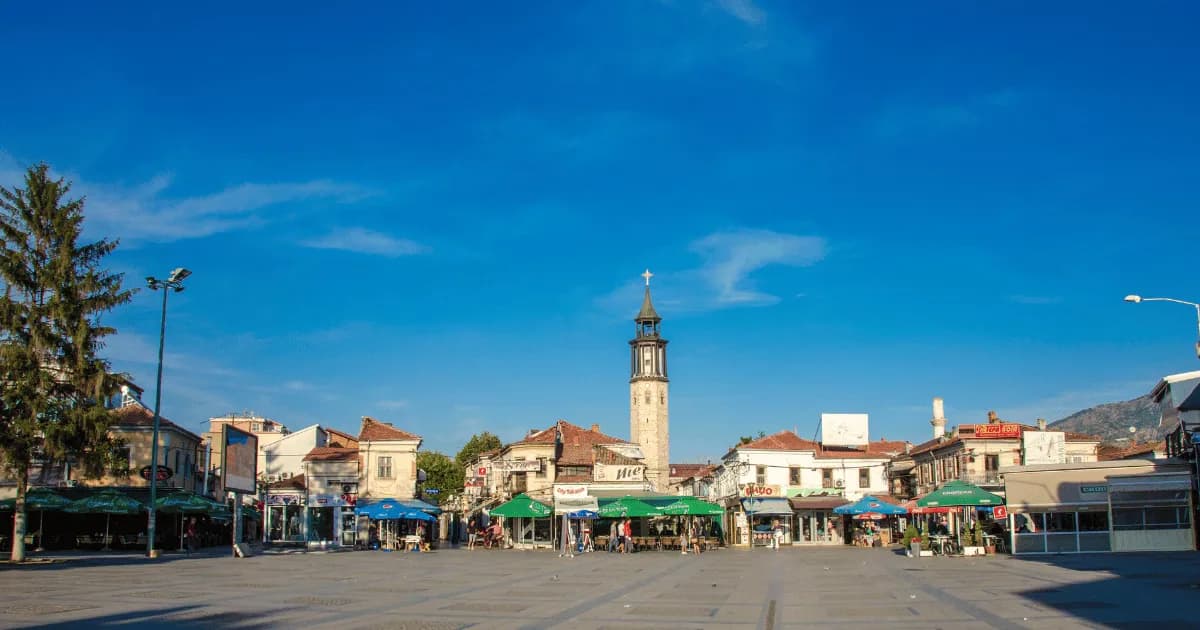
In the city center, a 19th-century Clock Tower (noted for its subtle lean) rises over cafés and the Itar Pejo fountain. Come by day for people-watching, or in the evening when the tower lights up and families fill the benches.
Stara Čaršija (Old Bazaar) & Bazaar Mosque Ruins
Radiating from the square, the Old Bazaar is a web of streets with clothing and craft shops, greengrocers, and family bakeries. Beside it stand the poignant ruins of the Čarši (Bazaar) Mosque—a once-grand 15th-century building now preserved in its scarred state, a fragment of layered local history.
Heraclea Lyncestis (Day Trip, 15–20 min to Bitola’s edge)
Founded by Philip II of Macedon in the 4th century BC, this remarkable site is among the Balkans’ top archaeological stops. Walk the Roman theater and baths, step into the early Christian basilicas, and linger over mosaics with animal and symbolic motifs.
Museum of Prilep
A compact, welcoming museum with archaeology, ethnology, and a lapidarium showcasing finds from Stibera—the major Hellenistic city near Čepigovo. It’s the perfect primer before you explore the countryside’s ruins.
Nature & Outdoor Adventures
Sunset Among Granite at Marko’s TowersFor the perfect Prilep moment, scramble onto a smooth boulder as the valley blushes. In summer, watch for Hermann’s tortoises ambling through the brush. Caves & Fortresses Circuit • Peshna Cave (near Makedonski Brod): A colossal mouth with fortress ruins at the threshold; legend links it to Marko’s sister Peshna. • Devini Kuli: A hilltop fortress ruin paired with Peshna in local lore; short hike from Devič with big views. • Ramnište Cave: A short there-and-back hike between Oreovec and Krsteč; bring a headlamp. • Duova Voda Spring & Cave: Combine with a hike to Kozjak Peak (1,747 m) starting at Pletvar. Pelister National Park (via Bitola)If you’ve got an extra day, tackle Baba Mountain trails and the glacial lakes known as Pelister’s Eyes. Alpine meadows, Molika pines, and wide-angle views make this one of Macedonia’s great hikes.
History & heritage
History & Culture: What’s in a Name?
Prilep’s name is wrapped in legend and scholarship. Some say it comes from houses “prilepeni” (attached) to Marko’s fortress; others link it to Old Slavic words for a muddy, marshy place. Linguist Blaže Koneski traced roots to personal names Prilepa/Prilepka. What’s certain is age: nearby Stibera thrived in antiquity; prehistoric traces dot Marko’s Towers; and the city’s medieval chapter culminated in its role as the capital of King Marko’s reduced domain before Ottoman vassalage and his death at Rovine (1395).
Fast forward, Prilep became a regional industrial and cultural center, famed for high-quality tobacco and marble, and for its wartime sacrifices—part of why it’s one of the SFR Yugoslavia’s eight “People’s Hero” cities.
Practical travel tips
Explore North MacedoniaWhere Is Prilep?
In Macedonia’s southwest, at the northern edge of Pelagonia. The city sits in the Prilep Field, ringed by the Babuna and Dren mountains.
Getting There & Around
• Road: The A3 links Prilep with Skopje (about 128 km) and other southern cities. • Bus: Frequent services connect Bitola, Kruševo, Skopje, and regional towns via the Prilep Bus Station. • On Foot/Taxi: Most inner-city sights are walkable. For Treskavec, caves, and rural monasteries, take a taxi or hire a car.
When to Visit
Continental climate with big swings. July averages low 20s °C (heat spikes possible), January hovers around freezing. May–June and September–October offer the best balance of clear air, mild temps, and golden countryside.
Where to Stay
Prilep leans boutique: family-run guesthouses, small hotels, and apartments near the main square or along quiet side streets. In the hills, simple monastery accommodations occasionally host pilgrims—always call ahead.
Etiquette & Safety
Religious sites are active—cover shoulders and knees, speak softly, and respect photo rules. Prilep is friendly and relaxed; use normal city smarts at night.