

Discover North Macedonia
A little closer toOhrid.
Plan your trip to Ohrid: Samuel’s Fortress, Kaneo, St. Naum, beaches, culture, food, tips, and the best time to visit Macedonia’s lakefront gem.
- Population
- River
- Founded
- Best Time
- Airport
About Ohrid
Ohrid
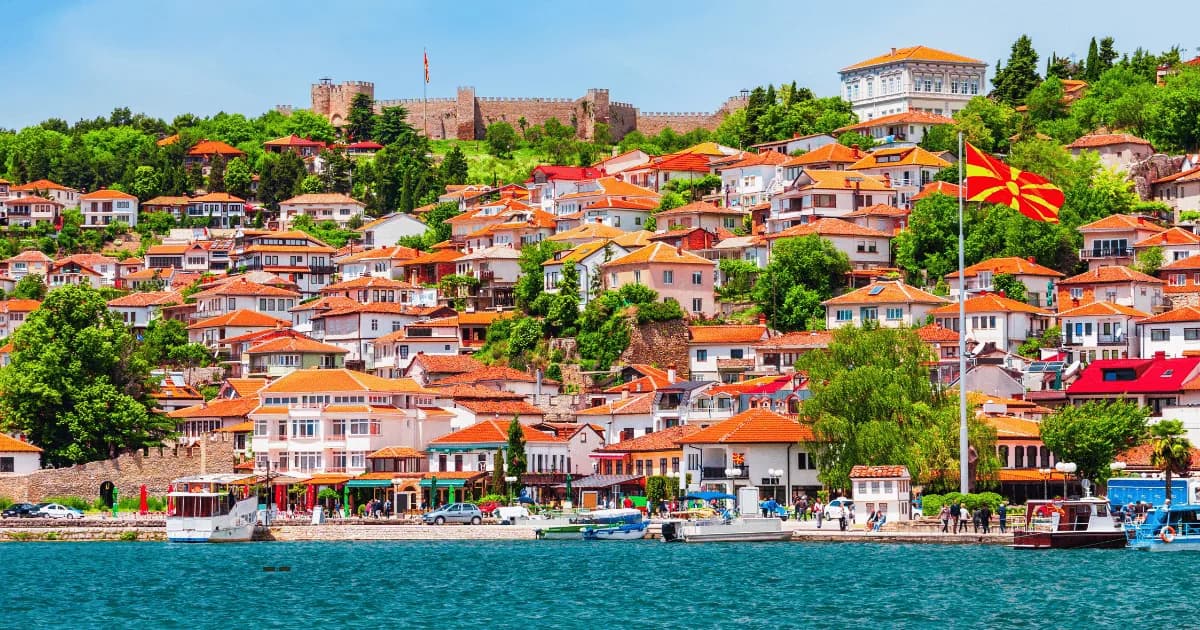
Ohrid isn’t just a destination—it’s a feeling. On the northeast shore of Lake Ohrid in southwestern Macedonia, the city pairs mirror-calm waters with hilltop fortresses, medieval churches, and an old town that glows golden at dusk. Long celebrated as the “City of Light” (from its ancient name, Lychnidos) and famed for its many churches, visiting Ohrid, Macedonia promises a rare blend of natural beauty, deep history, and lakeside ease. If you’re sketching out things to do in Ohrid, start with the lake and let the city’s layered past guide your steps.
Ohrid’s strategic position once placed it near the Roman Via Egnatia, the road that stitched together the Adriatic and the Aegean. Today, the city remains a true gateway: connected by road to Skopje, Bitola, Debar, and Albania, and served by Ohrid Airport for select seasonal routes. Boats crisscross the lake for tours and fishing, and although there’s no rail service, the ease of the road network makes exploration simple.
Part of Ohrid’s magic lies in small surprises. Step inside H. Bogorodica Perivlepta (St. Mary Perivlepta), famed for frescoes by the masters Mihail and Evtihij and long a guardian of St. Clement’s relics. Trace the medieval devotion at the Cave Monastery of St. Erasmus, where 12th-century frescoes cling to the rock near the road to Struga. Peek into St. Constantine and Helena, a one-naved jewel layered with paintings from the 14th, 17th, and 18th centuries. Each chapel is a threshold—light, pigment, and whispered prayers carrying across centuries.
Ohrid eats with the seasons. On warm evenings, tables bloom with shopska salad, grilled vegetables, and clay pots of tavče gravče (baked beans). By the lake, try Ohrid trout, an emblematic species with tender, delicate flesh—prepared simply so the flavor shines. You’ll also find grilled river fish, kebapi, slow-braised meats, village stews, and buttery layers of burek from early-rising bakeries.
Pair meals with local wines from the Tikveš region or a chilled spritzer on a waterside terrace. Finish with syrupy baklava or walnut-rich pastries and a tiny cup of strong coffee as the shoreline lights blink on.
Summer nights in Ohrid are made for culture. Concerts and theatre often animate historic venues, and the acoustics of St. Sophia transform choirs into something almost celestial. Street musicians tune up along the promenade, cafés hum softly, and boats bob against the piers. Whether you choose an intimate chamber performance in a courtyard or a lively night market stroll, the city’s after-dark tempo is mellow, musical, and welcoming.
For history lovers, the city reads like a layered manuscript. At Plaošnik, linger over carved stones and the sweep of the basilica’s foundations. At St. Sophia, stand beneath saints and philosophers rendered in lapidary color. At Kaneo, feel how architecture and landscape rhyme. And for those drawn to deep time, the Bay of Bones reveals how people lived above the water on timber, reeds, and clay—simple materials shaped into resilient community.
Nature seekers can thread lake days with walks on forested headlands, swims in pebble coves, and long lunches by the water. Culture seekers can trace a route of chapels, manuscripts, frescoes, and music. However you travel, Ohrid offers space to slow down and let the lake set the rhythm.
In Ohrid, beauty isn’t just seen—it’s felt. It’s the hush in a stone nave, the sparkle on a night-quiet lake, the kindness of a café owner who insists you try one more pastry “because you must.” If you’re gathering ideas for things to do in Ohrid or mapping the best places to visit in Ohrid, follow the shoreline and the bell towers. They will lead you through time.
Come for a weekend and you’ll plan a return; stay a week and you’ll leave a thread of your heart by the water. When you’re ready to visit Ohrid, Macedonia, the city of light will be waiting—old as memory, fresh as dawn.
Explore Ohrid
Samuel’s Fortress (Samuilova Tvrdina)
High above the rooftops, Samuel’s Fortress crowns the Ohrid Hill with muscular stone ramparts and 18 towers that once encircled the medieval city. Walk the walls, look out across the red-tiled old town to the cobalt sweep of the lake, and imagine caravans and pilgrims climbing these lanes centuries ago. Greek-inscribed stones set into the masonry and bands of Byzantine-format brick hint at the fortress’s long life of demolitions, repairs, and rebirths.
St. John at Kaneo (Sv. Jovan Kaneo)
Perched on a cliff over the water, this 13th-century church is Ohrid’s most iconic silhouette. Inside, fragments of original frescoes survive; outside, the scene steals every heart—fishermen’s boats below, the line of mountains across the lake, and evening light that turns the stone warm and honeyed. It’s one of the best places to visit in Ohrid for sunset.
Cathedral Church of St. Sophia (Sv. Sofija)
A masterpiece of Byzantine architecture with fresco cycles from the 11th and 14th centuries, St. Sophia has lived many lives: cathedral, mosque, museum, and concert hall. Its vast narthex (1313/14) is a jewel of medieval building craft, and the interior frescoes rank among the most important in Europe.
Plaošnik & St. Clement’s Monastery of St. Pantelejmon
On the rise known as Plaošnik, walk among the foundations of early Christian basilicas and the modern reconstruction of St. Pantelejmon. Here St. Clement taught and wrote, helping forge a Slavic literary tradition that radiated across the Balkans. Archaeological finds—monastic graves, crosses, garments, icons—speak to a continuous Christian life from the first centuries of the new era.
Monastery of St. Naum (Sv. Naum)
At the southern tip of the lake, St. Naum stands on a bluff above turquoise water. Built in 905 and rebuilt over centuries, its church holds the tomb of St. Naum and richly painted 18th–19th century frescoes. Listen for the whisper of springs nearby and the rustle of peacocks in the courtyard.
Bay of Bones (Museum on Water)
A reconstructed pile-dwelling settlement brings the Late Bronze and Iron Age to life. Stroll wooden walkways above the lake and peek into reed-and-mud houses outfitted with tools and ceramics. Divers discovered thousands of wooden piles here; the museum imagines how an 8,500 m² village once stood above the water, defended by a drawbridge.
Nature & Outdoor Life: A Lake Older Than Memory
Lake Ohrid is among Europe’s oldest and clearest lakes, a blue-green mirror rimmed by beaches and rocky promontories. Along the shoreline from Ohrid to St. Naum stretches the Ohrid Riviera, a sequence of coves and resorts: • Gorica (4 km): A crag-backed strand with wide views across the entire riviera. • Slavija / Sveti Stefan (4 km): One of the most frequented, clean and well arranged. • Metropol & Bellevue (8 km): Lakeside hotels with balconies angled to the water. • Lagadin: The longest beach (about 285 m) and a festive spot for summer parties. • Elešec (10 km): A laid-back auto-camp with bungalows and trailer sites. Beyond swimming and sun, hire a boat for a slow glide beneath Kaneo’s cliffs, or explore coastal trails where pines scent the air. The lake itself supports traditional fishing and gentle tourist traffic; mornings are glassy and quiet, afternoons bring a friendly breeze.
History & heritage
History & Culture: From Lychnidos to UNESCO
Ohrid’s story stretches deep into antiquity. Known as Lychnidos, “the city of light,” it sat by the Roman Via Egnatia and was first mentioned millennia ago. In the 9th century, saints Clement and Naum made Ohrid a crucible of Slavic literacy and spirituality; by the time of Tsar Samuil (10th–11th centuries), the city was both a religious center and a royal capital. Today, the Ohrid region is part of UNESCO World Heritage, recognized for its symbiosis of culture and nature—churches and monasteries that seem to grow from the hillside, and a lake whose waters have nurtured unique life for ages.
Wander the old town’s stepped lanes and you’ll pass layers of history: medieval walls, Ottoman-era houses with broad upper stories, tiny chapels tucked behind gardens, and stone thresholds smoothed by centuries of footsteps. Ohrid’s churches hold some of the Balkans’ most expressive fresco painting—look for the rare depiction of angels in royal robes at Kaneo—and its monasteries preserve glagolitic and Cyrillic inscriptions, the living script of a civilization.
Practical travel tips
Explore North MacedoniaShopping & Souvenirs: Gifts with a Story
Take home a piece of Ohrid’s craft tradition. Seek out Ohrid pearls, made using time-honored techniques; look for workshops that share the story behind each pair. Browse hand-carved wood, filigree jewelry, icons painted in the Orthodox style, and pottery inspired by archaeological finds. Food lovers should stock up on mountain teas, local honey, and jars of ajvar—a taste of summer peppers to open back home.
Geographic Position & Access
Ohrid sits in Macedonia’s far southwest, on the northeastern shore of Lake Ohrid, near the border with Albania. Roads link the city to Skopje, Bitola, and Debar, and onward to Albania. Ohrid Airport operates flights to select destinations in season. There’s no rail service, and lake traffic is mostly recreational—great for scenic cruises and fishing outings.
Getting Around
The old town is compact but hilly; wear comfortable shoes. Taxis are easy to arrange, and boats shuttle to nearby beaches and monasteries in good weather. For the southern shore, plan a half-day loop that includes St. Naum and coastal beach stops.
Best Time to Visit Ohrid
Late spring to early autumn offers warm days for swimming and evening strolls along the quay. July and August bring the liveliest calendar and buzziest beaches; shoulder seasons (May–June, September) pair gentle weather with fewer crowds and crystal views.
Where to Stay
Choose a lakeside hotel for sunrise over the water, a heritage guesthouse in the old town for cobbled-lane charm, or a resort along the riviera if you want beach access and on-site amenities. Families often opt for apartment stays near the promenade.
Respect & Etiquette
Churches and monasteries are living places of worship—dress modestly, keep voices low, and avoid flash photography unless allowed. Always ask before photographing people.