

Discover North Macedonia
A little closer toKrusevo.
Plan a Kruševo escape: Makedonium, Ilinden history, bazaar crafts, ski slopes, hikes, and mountain cuisine in Macedonia’s highest town.
- Population
- River
- Founded
- Best Time
- Airport
About Krusevo
Krusevo
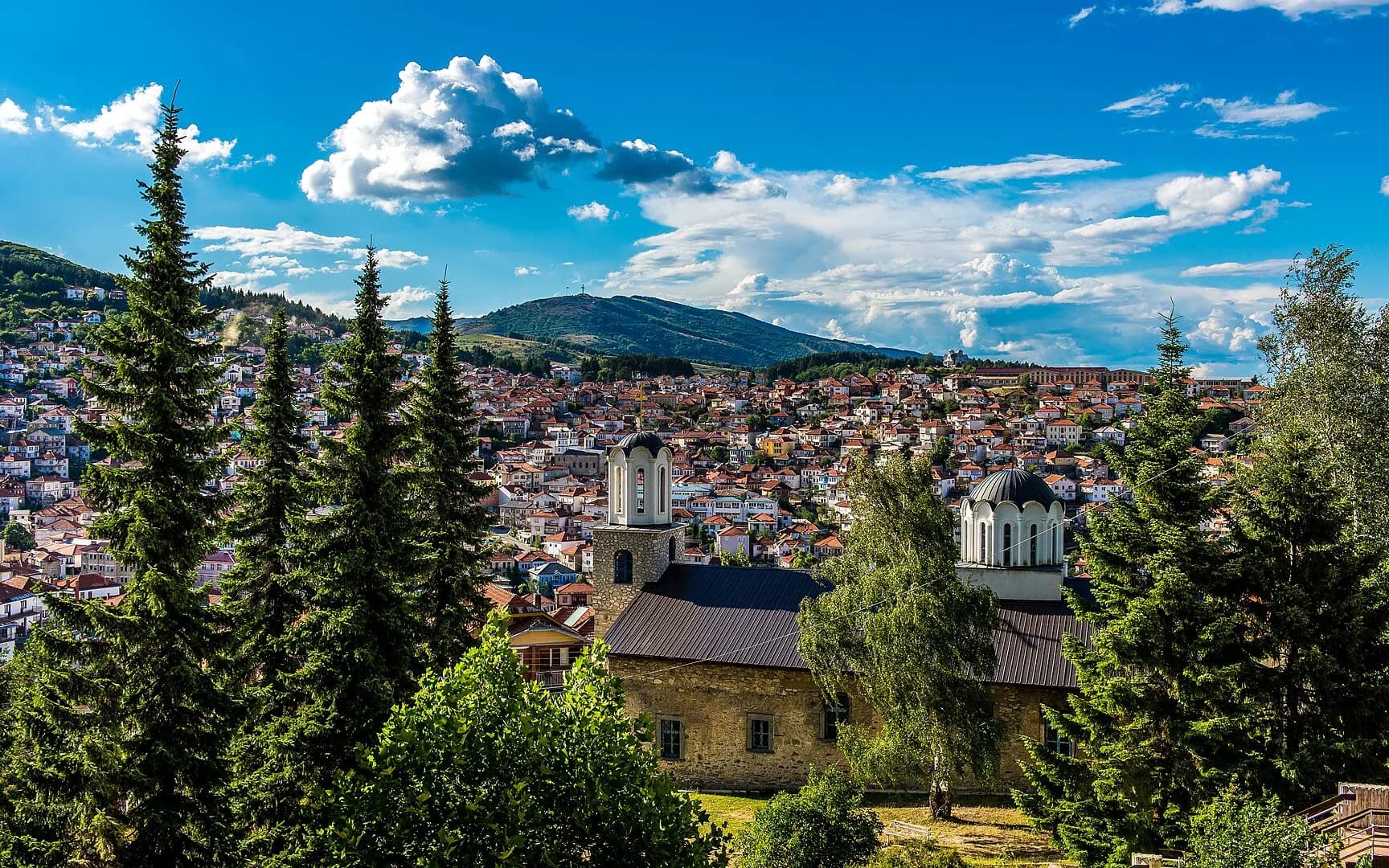
Perched at 1,350 metres above sea level on the forested slopes of Buševa Planina, Kruševo is a mountain city with the soul of a village and the footprint of a museum. It’s the highest town in the Balkans, where cobbled streets climb past painted houses, where workshops still hum with traditional crafts, and where a remarkable monument—the Ilinden Memorial Complex (Makedonium)—keeps the story of a short-lived republic alive in stone and glass.
If you’re planning to visit Kruševo, Macedonia, expect clear air, panoramic views, and a rare blend of history and heart. This is a place to slow your pace, follow your curiosity, and let the city’s layered past unfold as you wander.
Cool evenings and brisk mornings call for hearty mountain fare. Order tavče gravče—butter-soft beans baked in a clay pot—alongside grilled meats, village sausages, and roasted peppers. Salads come heaped with tomatoes and white cheese; bread arrives warm and crusty.
Stop in a pastry shop for lokum (Turkish delight) in the local style or simple walnut sweets. Pair meals with Macedonian wines—Vranec for reds, crisp Žilavka or Smederevka with lighter dishes—or keep it mountain-traditional with a shot of rakija to toast the view.
2 August (Ilinden) fills Kruševo with commemorations, wreaths, and music. Expect ceremonies at Makedonium and Mečkin Kamen, historical reenactments, and a festive atmosphere in the bazaar. Winter brings local ski gatherings; summer weekends fill with open-air concerts and community events that spill into squares and café terraces.
Explore Krusevo
Makedonium (Ilinden Memorial Complex)
Set on Gumenje Hill just above town, this white, sculptural landmark was inaugurated on 2 August 1974. Its four-platform complex commemorates both the Ilinden Uprising of 1903 and later struggles for freedom. Step inside the domed core to find reliefs, stained-glass windows, and the eternal flame; step outside for sweeping views towards Mečkin Kamen, Sliva, and the Pelagonia plain. It’s Kruševo’s unmistakable silhouette—and a moving introduction to the city’s story.
Mečkin Kamen (Bear’s Stone)
A short drive from town, this historic site marks one of the fiercest battles of the Ilinden Uprising. The monument stands amid calm meadows and pines, but the earth here echoes with 1903. Come for the view; stay to reflect.
Museum of the Ilinden Uprising and the Kruševo Republic
Housed in a traditional 19th-century town house, this museum traces the uprising from planning to proclamation. Photographs of the interim government, the Kruševo Manifesto, maps, and artifacts—including the 2003 reconstruction of a bullet foundry—give the events a human scale.
Museum of the People’s Liberation War
Near Makedonium, this collection focuses on 1941–1945, with a commanding mural by Borka Lazeski. Seen alongside the Ilinden museum, it rounds out Kruševo’s role across two defining chapters.
Churches and Painted Houses
The main church, St. Nikola (1832), is famed for its iconostasis by the workshop of Petre Filipovič–Garkata. Around it, the Old Bazaar and neighbourhoods such as Vlaško Maalo reveal Kruševo’s vernacular architecture: tall, square stone houses with timbered upper levels, blue-painted details, and steep red roofs set amphitheatrically on the slope.
Tose Proeski Memorial House
Kruševo honours its beloved singer Toše Proeski (1981–2007) in a modern, light-filled memorial. Exhibits trace his life, music, and humanitarian work—an intimate counterpoint to the city’s older history.
Nature & Outdoor Activities: Four Seasons of Fresh Air
Hiking & PanoramasThe town’s amphitheatre setting means every lane becomes a viewpoint. For longer walks, follow forest roads on Buševa Planina or climb the ridges west of town for sunset colours over Pelagonia. Even casual strolls deliver big-sky moments. Skiing & Snow PlayFrom November to late March, Kruševo’s winters are mild, sunny, and fairly snowy. The Stanič ski area on Buševa’s flanks sits around 1,200–1,400 m, with lifts and beginner-friendly pistes close to town. Cross-country tracks thread meadows just beyond the last houses. Paragliding & CyclingThe terrain and thermals around Kruševo make it a favourite for paragliding in warm months; tandem flights lift off from slopes near the south end of town. Road cyclists and gravel riders can link Kruševo with nearby villages on rolling, lightly trafficked roads—just save gears for the return climb. Climate at a GlanceKruševo averages 8.4°C annually, with gentle transitions between seasons. Autumn is warmer than spring (about 9.5°C vs. 7.2°C), and while summer days are pleasant, evenings can be cool. Frosts are common at altitude; pack layers even in July.
History & heritage
History & Culture: The Republic on the Roof of the Balkans
Kruševo’s earliest written mention dates to 1467, but the city we see today took shape in the late 18th and early 19th centuries. Waves of settlers—Vlachs from Moskopole and later Gramos, Orthodox Albanians, and Macedonian Mijaks from highland villages like Galičnik and Lazaropole—founded distinct quarters (Vlaško Maalo, Strunga, Arnaut Maalo, Mijak Maalo). Their skills in herding, trade, building, wood-carving, and painting fueled rapid growth; by 1883 Kruševo counted roughly 12,000 inhabitants and a bustling bazaar.
On 2 August 1903, rebels seized the town and proclaimed the Kruševo Republic. An interim government of six and an assembly of sixty delegates governed for eleven days—long enough to publish the inclusive Kruševo Manifesto, which appealed across communities. On 12–13 August, Ottoman forces under Bahtiar Pasha retook the city after battles at Mečkin Kamen and Sliva. Kruševo was burned, families scattered, and yet the idea of Ilinden endured.
Walk the streets today and you’ll feel those layers: Ottoman-era lanes, 19th-century facades, Yugoslav-era monuments, and a living rhythm of workshops and cafés that belong unmistakably to Kruševo.
Practical travel tips
Explore North MacedoniaShopping & Souvenirs: Makers of Kruševo
Kruševo’s name travels on the work of its builders, painters, and woodcarvers—a tradition alive in small ateliers around the bazaar. Seek out carved spoons and panels, copper and tin work, and simple household pieces fashioned the old way. Food lovers can take home local honey, ajvar, herb teas, or a neatly wrapped box of Kruševo lokum. Choose compact items that pack well; ask for paper wrap to protect wood finishes.
Where is Kruševo?
The city sits on the western rim of the Pelagonia Valley, about 32 km west of Prilep, 52.5 km north of Bitola, and 25 km north of Demir Hisar. It straddles the Kruševo River, with most of the town on the left bank and houses climbing amphitheatre-style up the hill.
Getting There
• By road: Kruševo is an easy detour between Skopje and Ohrid via Prilep/Bitola. Approach through Prilep for the most straightforward climb. • By bus/minivan: Frequent regional services connect via Prilep (the most common hub). Schedules are denser on weekdays; arrive early at small stations. • By car: Mountain roads are well maintained; in winter, check conditions and carry chains.
Getting Around
You’ll explore mostly on foot. Streets are steep, narrow, and photogenic—bring comfortable shoes. Taxis are handy for Mečkin Kamen, trailheads, or a lift back up after long walks.
Where to Stay
Guesthouses and small hotels cluster near the bazaar or along the slopes with west-facing balconies. Choose centre-town for café convenience or hillside lodgings for sunrise light and open views.
What to Pack
Layer up: even in summer, evenings can be brisk. Add sun protection, a compact rain shell, and footwear with grip for cobbles and forest paths. For churches and memorials, modest dress is appreciated.
Accessibility & Pace
The historic core’s slopes and steps can be challenging. Plan shorter sightseeing windows, build in café pauses, and consider taxis to higher monuments if needed.
Day 1 – History & Heart
Morning: Walk up to Makedonium; tour the interior and sculpture park.Midday: Lunch near the entrance, then visit the Museum of the Ilinden Uprising in the 19th-century house.Afternoon: Stroll the Old Bazaar, peek into workshops, and visit St. Nikola.Evening: Golden-hour photos from a hilltop lane; dinner of tavče gravče and grilled meats.
Day 2 – Views & Voices
Morning: Head to Mečkin Kamen (short drive) for views and quiet reflection.Midday: Return for a leisurely lunch; sample lokum and coffee in the bazaar.Afternoon: Visit the Toše Proeski Memorial House; optional hike or tandem paragliding.Evening: Warm layers, a glass of Vranec, and the rooftops glowing under a mountain sunset.