

Discover North Macedonia
A little closer toKavadarci.
Plan your Kavadarci trip: Tikveš vineyards, Tikveš Lake, Polog Monastery, tastings, lake days, and tips for the best wine escape in southern Macedonia.
- Population
- River
- Founded
- Best Time
- Airport
About Kavadarci
Kavadarci
Cradled by rolling hills and brushed by vineyard breezes, Kavadarci sits in the middle of Macedonia’s storied Tikveš region—the country’s largest, most celebrated winegrowing area. The town spreads across both banks of the lively Luda Mara River at 230–270 meters above sea level, and its name, some say, derives from kavadion—a fine, precious cloak. It fits: Kavadarci wraps visitors in sunshine, hospitality, and the flavors of a landscape stitched with vines.
If you’re planning to visit Kavadarci, Macedonia, expect easygoing days among vineyards, lake time on dramatic Tikveš Lake, and a fascinating backstory that stretches from Ottoman travelogues to modern wine renaissance. Here’s your friendly, insider’s guide to the best places to visit in Kavadarci, plus where to sip, stroll, and stay.
Kavadarci is both a small city and a generous countryside: a place where long rows of vines run into the horizon and a cheerful center squares up cafés, bakeries, and wine bars for unhurried afternoons. The town first appears in records in 1519 as a rural settlement; by 1664 the famed traveler Evliya Çelebi noted its bustling neighborhoods, mosques, and bathhouse. Throughout the 19th century, Kavadarci anchored administration and trade for the wider Tikveš area—a role it still plays today.
Geographically, it’s a natural crossroads. Main roads connect Kavadarci north to Skopje and south to Gevgelija and the Aegean gateway; branch routes lead west toward Prilep and Ohrid. More importantly for travelers: wherever you go, vineyards accompany you. From Veles down to Demir Kapija and Gevgelija, the roadside scenery is a tasting list in green.
The Tikveš table is an embrace—plentiful, colorful, and cooked from the heart. Start with shopska salad (tomatoes, cucumbers, onions, and white cheese), roasted peppers, and warm bread. Share classic tavče gravče (baked beans in a clay pot), grilled meats, and clay-baked casseroles perfumed with paprika and herbs. Then there’s the grape’s second life: rakija to awaken the appetite and Vranec to accompany the main event.
Wine pairings to try
- Smederevka or a crisp blend with grilled trout or lake fish.
- Vranec/Kratošija with slow-roasted lamb or pork.
- A late-harvest white with walnut pastries or quince jam.
Looking for souvenirs? Take home a bottle (or two), local honey, herb teas, and jars of ajvar—the deep red pepper spread that brightens winter tables.
Harvest season (early autumn) brings grape-laden trailers through town and a festive hum in winery courtyards. Expect pop-up tastings, folk music, and community events that celebrate the year’s work and the region’s wine pride. If you love meeting vintners, this is the best time to come—cellars are alive, presses are running, and stories pour as freely as the wine.
Nightlife is relaxed and social: café terraces, wine bars with tasting flights, and casual restaurants where dinner is as much conversation as cuisine.
Kavadarci is not a checklist; it’s a mood—the rustle of vines at noon, the clink of glasses at dusk, the way lake light turns gentle in late afternoon. Between the things to do in Kavadarci and the stories you’ll hear from growers and monks, you’ll find something rarer: the steady rhythm of a place that still lives by the sun and the seasons. Come for the wine; stay for the warmth. Chances are you’ll plan your return before your glass is empty.
Explore Kavadarci
Tikveš Wine Country
This is Tikveš—from the local cooperative’s historic cellars to boutique estates hidden among low hills. The region covers roughly 11,000 hectares of vines, a patchwork of traditional Smederevka and Vranec/Kratošija alongside table-grape varieties like Cardinal, Hamburg, Afus Ali, and Ribier. Winery tours are a must among the things to do in Kavadarci: walk the rows, sample whites bright with sun, and compare Vranec styles—from plush plum-dark to spicy, oak-kissed bottlings. Tip: Book tastings in advance (especially on weekends). Many wineries offer vineyard walks, cellar tours, and guided flights pairing cheeses and local charcuterie.
Tikveš Lake: The Big Blue of the South
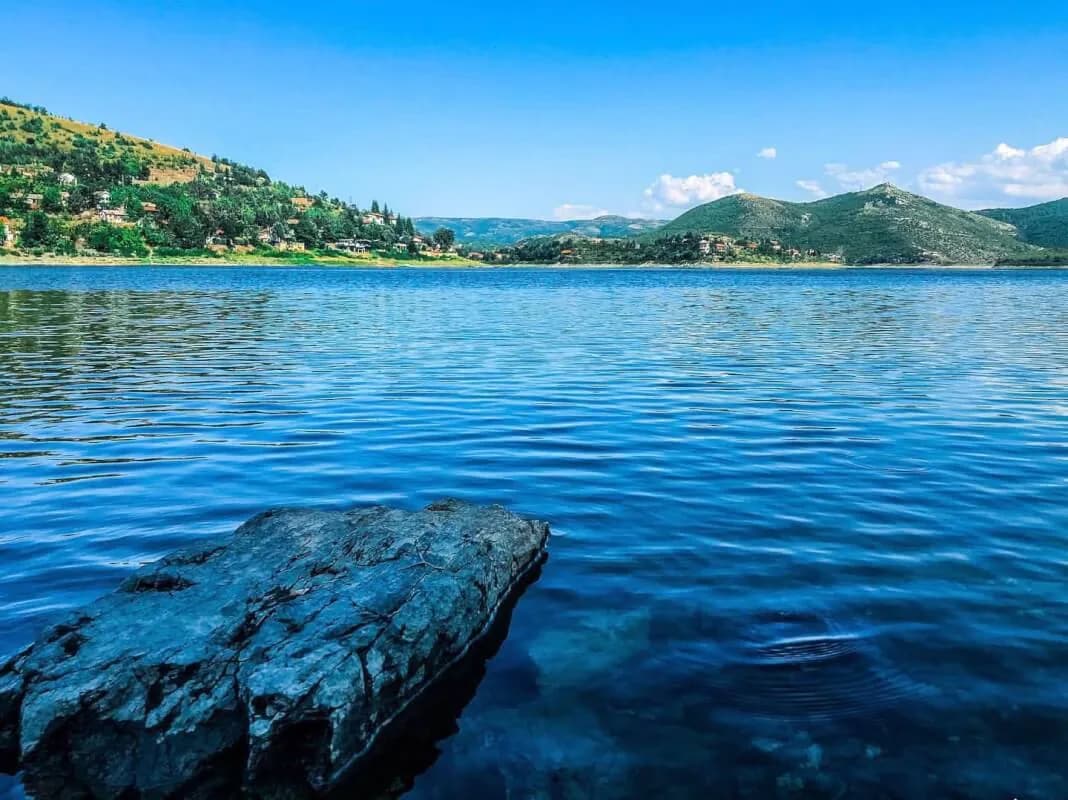
Just upstream where the Crna Reka carves a canyon, Tikveš Lake sprawls long and sinuous—28 km from end to end, about 14 km² in area, backed by rugged hills. Completed in 1968 with a 104 m stone dam (clay core), the reservoir now irrigates vineyards, generates hydropower, and plays host to leisurely days: boat rides, fishermen on quiet coves, weekends at waterside cottages, and summer picnics under tamarisk shade. Why go: For the scenery and the fishing. Catfish here can grow to more than two meters; ask locals about the best times (and permits) if you’re keen to try your luck.
The Island “Gradot” and Medieval Tikveš
When lake waters rose, the crown of a fortified settlement remained as an island. Known as Gradot (literally “the town”), it preserves traces of the ancient and late-antique Tikveš settlement—inhabited since the 3rd century BC and later ringed with towers. Foundations and stones hint at centuries of life. Seen from a boat, the island feels like a puzzle piece from a much bigger picture.
Polog Monastery of St. George (14th century)
Southwest of town at the foot of Višeshnica on the lake’s left bank lies Polog, a jewel-box monastery with 14th-century frescoes that seem to glow from within. Most remarkable is its 1492 wooden chandelier—the oldest dated woodcarving in Macedonia. The setting—pines, vineyards, water—makes a contemplative visit even more special.
Mokliško Lake: When Nature Built a Dam
At the edge of Kavadarci in the Luda Mara valley, Mokliško Lake formed in 1956 when a hill collapsed, naturally blocking the river. Geologists call it a “ruin lake”; locals call it a curiosity—and a peaceful spot for a stroll.
Nature & Outdoor Activities: Vineyard Ways and Waterside Days
• Cycling & Scenic Drives: Quiet roads thread vineyards and olive groves. Plan a loop from town to lakeside viewpoints, then back through the vines at golden hour. • Boat Trips & Fishing: Explore Tikveš Lake by small boat to see Gradot from the water. With permits, anglers can target carp, pike, and catfish. • Birdwatching & Picnics: Reeds and coves shelter herons and kingfishers; shores provide shady picnic spots where kids can splash in shallows while grownups linger over coffee. • Riverside Walks: The Luda Mara keeps Kavadarci fresh. Follow its banks for a gentle amble and a feel for local life.
History & heritage
History & Culture: From Çelebi’s Notes to a City of Wine
Kavadarci grew from a 17th-century seed into a 19th-century hub thanks to its position on the Prilep–Demir Kapija–Thessaloniki route and the energy of farmers, traders, and artisans. Jordan Hadži-Konstantinov-Džinot, the educator and writer, later described a central village with a handsome church, a small school, several mosques, and a clock tower—proof that Kavadarci commanded both spiritual and civic life in Tikveš.
After World War II, the city expanded steadily, rising from about 6,000 inhabitants (1948) to over 30,000 (2002). Through it all, the constant was the vine. Wine and rakija (brandy) nourished not just the local economy but a culture of hospitality: meals that linger, toasts that multiply, and neighbors who never let your glass run dry.
Practical travel tips
Explore North MacedoniaShopping & Souvenirs: Crafted by Hand, Ripened by Sun
• Wines of Tikveš: From everyday quaffers to cellar-worthy reds—ask producers about vineyard sites and aging regimes for deeper context. • Artisanal Foods: Ajvar, fruit preserves, rakija, cured meats, and cheeses from surrounding villages. • Handwork: Look for simple woodcarvings, woven textiles, and pottery in markets and small shops. Tip: Pack bottles snugly; most wineries can supply travel sleeves. Declare liquids if you’re flying.
Best Time to Visit
Spring (April–June) and autumn (September–October) are ideal—warm days, cool evenings, vines in bloom or harvest in swing. Summer is hot and bright (bring a hat), perfect for lake time; winters are calm and mild in the valley.
Getting There & Around
• By car: About 1.5–2 hours from Skopje via the main Skopje–Gevgelija corridor; branch roads link to Prilep and Ohrid. • By bus: Regular regional connections; schedules expand in summer. • In town: The center is walkable. Taxis or designated drivers are best for winery-hopping; many estates are close but spaced out.
Where to Stay
Choose a guesthouse in town for café convenience, or a vineyard stay for views across the vines and sunsets framed by hills. On the lake, weekend cottages and small lodges suit unplugged retreats.
Etiquette & Practicalities
• Dress modestly in monasteries; ask before photographing frescoes. • Tasting-room etiquette is simple: reserve ahead, avoid heavy perfumes (they mask aromas), and spit between sips if you have multiple stops. • Credit cards are widely accepted; keep some MKD cash for markets and smaller cafés. • Smoking is common on terraces; many indoor spaces are non-smoking.
Safety
Kavadarci is friendly and relaxed. Standard travel sense—watch valuables, hydrate in summer, and arrange safe transport after tastings—goes a long way.
Day 1 — Wines & Water
Morning: Vineyard tour and guided tasting (start with a major producer to understand Tikveš’s scope).Lunch: Winery restaurant or a town taverna—order tavče gravče and grilled meats, pair with Vranec.Afternoon: Drive to Tikveš Lake for a boat ride and views of Gradot; relax waterside.Evening: Back in town for a wine bar flight and dessert.
Day 2 — Stones, Saints & Slow Hours
Morning: Visit Polog Monastery of St. George for 14th-century frescoes and the famed 1492 chandelier.Midday: Picnic by the lake or riverside; quick stop at Mokliško Lake on your return.Afternoon: Stroll the center—coffee, market browsing, and a bottle run for souvenirs.Evening: Sunset among the vines, then a leisurely dinner toasting Tikveš hospitality.