

Discover North Macedonia
A little closer toDebar.
Explore Debar: a historic Macedonian town known for Debar Lake, healing thermal baths, Rajcica Monastery, mountain landscapes, and rich cultural heritage.
- Population
- River
- Founded
- Best Time
- Airport
About Debar
Debar
Debar is a historic city in western North Macedonia, known for its rich traditions, spiritual heritage, natural wonders, and centuries-old craftsmanship. Situated near the shores of the stunning Debar Lake and surrounded by high mountains, the city serves as the administrative centre of the Debar Municipality, which includes 17 villages. Debar is one of the westernmost points of the country and is home to a diverse population, including a significant number of Macedonians of Islamic faith.
The name Debar has ancient roots. Many researchers believe that the name comes from the Old Slavic word “debar” (дьбръ) meaning valley or gorge, perfectly describing the geography surrounding the city.
Jordan Hadzi-Konstantinov-Dzinot, a notable Macedonian educator from the 19th century, often used the terms “debrina” and “debrini” to refer to valleys and deep terrains, reinforcing this interpretation.
However, historical sources also mention Debar long before Slavic settlement. In ancient records, such as “Unnov’s History,” Debar appears in relation to events dating as far back as 268 BC, where it is described as “Deboros,” referencing a valley or gorge in Latin. This suggests that Debar’s name predates the Slavic era and is deeply rooted in the region’s geographic identity.
According to folk legend, carriers transporting goods through steep mountain roads would shout “Di-bre! Di-bre!” to encourage their tired horses. Over time, locals say, this phrase evolved into the name Debar—a poetic reminder of the hardworking people who lived there.
Debar is located in a beautiful valley in the extreme western part of North Macedonia, near the Albanian border.
- Skopje: 131 km
- Struga: 52 km
- Gostivar: 71 km
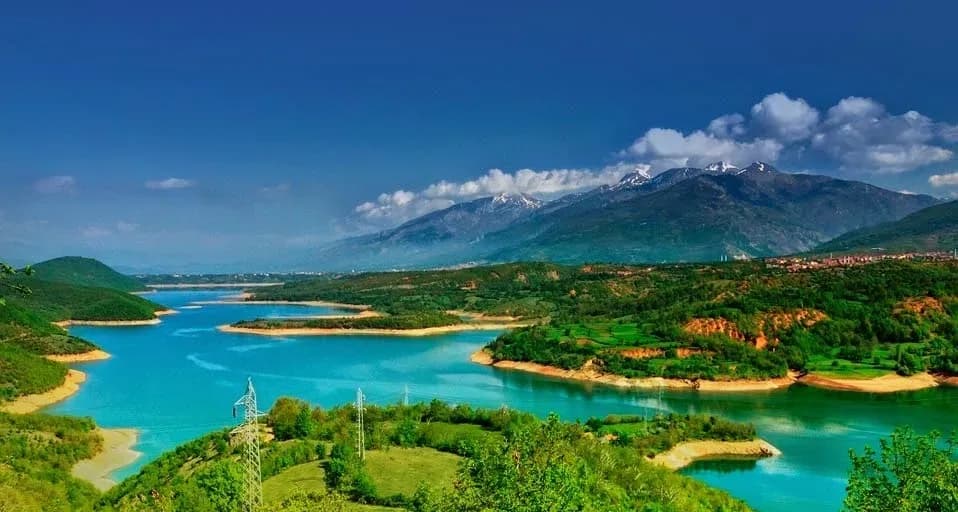
The city sits at 625 metres above sea level, nestled at the foot of Mount Deshat (Krcin) and surrounded by mountain ranges including Stogovo and Jablanica. Its southern border touches the waters of Debar Lake, an artificial yet spectacular lake formed in 1969 by the Shpilje Dam at the confluence of the Radika and Crn Drim rivers.
Debar’s historical significance comes from its position along the ancient Via Egnatia, the major Roman road linking the Adriatic with Byzantium. In earlier centuries, Debar served as a major economic link between:
- Struga,
- Prizren,
- Tirana,
- Kicevo, and
- Gostivar.
Debar was once a powerful centre of craftsmanship. The Macedonian population traditionally practiced:
- Goldsmithing
- Blacksmithing
- Masonry
- Icon painting & fresco painting
- Shoemaking
- Tailoring
- Copper work
Meanwhile, many Albanians in the region focused on trade and commerce. Agriculture also flourished in the surrounding villages.
Debar Lake, also called the Špilje Accumulation, stretches:
- 13 km along the Crn Drim Valley, and
- 8 km along the Radika Valley.
Key facts:
- Area: 13.2 km²
- Purpose: Electricity generation, irrigation, recreation
- Surrounded by breathtaking landscapes including:
- Rajcica Monastery
- Banjishte & Kosovrasti Spa Resorts
- Majestic peaks of Deshat and Stogovo
The lake is a popular destination for:
- Fishing
- Kayaking
- Boating
- Picnics
- Weekend getaways
Debar is famous for its thermal springs, known for their healing properties.
Located at the foot of Mount Krcin near Radika River.
- Capacity: 60 L/sec
- Temperature: 48°C
- Rich in sulfur-sulphide elements and algae
- Known for treating:
- High blood pressure
- Rheumatism
- Diabetes
- Skin diseases
- Respiratory conditions
Situated northwest of Debar at 650 metres altitude.
- Capacity: 100 L/sec
- Temperature: 38–48°C
- Similar mineral composition to Kosovrasti
- Offers therapeutic treatments and accommodation facilities
Both thermal spas are popular for health tourism throughout the region.
Located in Rajcica village, only 3 km from Debar, this monastery is a spiritual haven and one of the most beautiful monastic complexes in North Macedonia.
- Contains relics of St. George the Victorious
- Houses a piece of the True Cross
- A functioning female monastery
- Monastic workshops produce:
- Mitres (bishops’ ceremonial crowns)
- Icons
- Rosaries
- Church ornaments
These handmade mitres are famous across the Orthodox world for their quality and craftsmanship.
Visitors can stay overnight in the monastery guest rooms and experience peaceful monastic life.
Debar is a place where:
- Nature meets history,
- Spirituality meets tradition, and
- Lakeside beauty meets mountain serenity.
It is ideal for travelers seeking:
- Wellness and spa tourism
- Religious and cultural heritage
- Crafts and ethnographic traditions
- Mountain adventures
- Lakeside relaxation
Practical travel tips
Explore North MacedoniaClimate
Debar’s climate is a blend of: • Continental, • Mountain, and • Mediterranean influences, due to the Adriatic Sea’s impact moving up the Crn Drim valley.The city experiences: • Snowy winters, • Mild, humid springs and autumns, and • Cool, refreshing summers – ideal for tourism.